The information and opinions published represent the views and opinions of the interviewee and do not necessarily represent the views or opinions of She Owns It. The publication of Content on the site does not constitute an endorsement by She Owns It.
Co-founder of The Endurant Movement, a nonprofit born from her lived experience of the death of her son, Anthony (“Ant”), by suicide, Samara Tricarico has transmuted unimaginable grief into a calling to serve others. She holds presence, fosters connection, deepens communication, and models the ongoing practice of healing.
Samara leads efforts grounded in the belief that awareness is the cure, bringing people together in authentic conversations about neurodiversity, suicide, and resilience. Her programs weave sensory awareness, storytelling, and somatic practices to help people reconnect with themselves and each other. Through her work, she embodies and invites the courage to speak openly about the full spectrum of human experience. Samara creates compassionate space for consciousness to expand, guiding individuals and communities to see pain not as something to fix, but as a pathway to deeper understanding and growth.
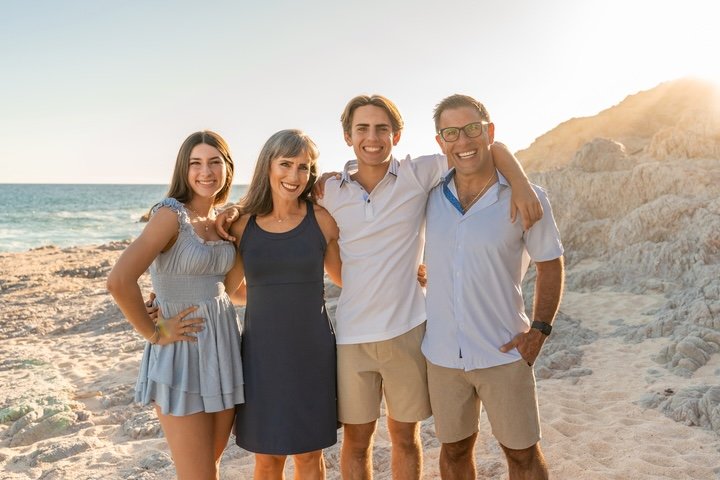
Samara Tricarico, Co-Founder of The Endurant Movement
Can you start by introducing yourself and telling us your inspiring story? We’d love to learn more about how you got to where you are today.
Thank you for allowing me to share my story. My hope is that by opening this conversation, it might help others find understanding, connection, and courage. At my core, I know I am here to help and to serve, through spreading awareness and elevating the dialogue around deep and difficult topics.
In the spring of 2024, my son died twice. He took his own life, was resuscitated, and sustained a traumatic brain injury that required hospitalization and around-the-clock care. Over nine tender weeks, he underwent multiple surgeries while our community held us in an ocean of love. Every Sunday evening, friends and family from all over the world gathered on Zoom — across faiths and time zones — forming prayer circles at the very hour of his attempt, weaving a tapestry of devotion, light, and collective healing.
Ultimately, he could not survive in this world, and my husband and I made the impossible choice to release him into peace, removing his life support. From the vast community that surrounded us with grace, love, and unwavering support, we began to heal, slowly recognizing how deeply and profoundly we all need one another. Our hearts were cracked open, our eyes widened to a greater truth: that we are all connected, and that our healing happens in community. Grief is deeply personal, yet universal — and through this loss, we were called to something greater: a path of expansion, healing, love, and ultimately, the work of saving teen lives.
We all face challenges. Looking back, what have been some of the biggest challenges and obstacles you’ve had to navigate?
In addition to my son’s death, I’ve faced other profound challenges that shaped who I am today. My parents’ divorce in high school, which involved domestic violence and abuse, left a lasting impact and shaped my early understanding of safety and trust. I graduated high school at 16 and college at 20, with high honors at both. I got engaged while in college, grasping for stability and security that I thought I could control, only to have him call it off, leaving me with yet another loss and search for meaning. I poured myself into achievement.
When I was in my twenties, my dad died suddenly of a heart attack. It happened to be a few weeks after I got sober and less than a week after 9/11. That experience of sudden loss and transformation shook me to my core, but also became a catalyst for growth and awakening.
As life continued to unfold, marrying my husband and the natural births of both my children became acts of courage and trust — true rebirths in every sense. Each chapter of my life has revealed both the depths of pain and the boundless capacity for joy, strength, and love. These experiences have deepened my awareness and expanded my ability to hold compassion, both for myself and for others walking through their own dark nights.
How do you prioritize self-care and well-being while managing the demands of your business?
It’s the old adage that you have to put your oxygen mask on first. It’s a must for me. I don’t just talk about self-care, I preach it. So I walk the walk. My daily routine is that I wake up at 5, drink lemon water, meditate, drink greens, and then have a little caffeine and a 6 am circuit training workout. I’m back by just after 7 for a little time with my daughter, walk my dog, and then I’m showered & ready to start my workday at 8. I also make sure to take movement breaks throughout the day, and I wind down with screen-free reading or crosswords before lights out by 9. I’ve learned that self-care isn’t indulgent — it’s foundational. It’s how I stay resourced to hold space for others. I’ve also come to terms with the importance of failure – putting forth effort and seeing what works and what doesn’t. It’s been key to a life of learning, loving, and giving grace.
What would you consider your biggest accomplishment and why?
Picking myself up and stepping forth into the limelight when shame and fear could keep me in hiding. Talking about the suicide of my son isn’t easy, yet I see the bigger picture necessity of normalizing the conversation about mental health struggles. If I can talk about it my hope is that others can see that it’s okay to not be okay. And not only are there professional resources and help lines, but there are real people and communities who can hold space and can handle the depth of despair. I’m not afraid to have difficult conversations and find them essential for our communities to progress and grow.
How did you go about setting up a non-profit?
I never imagined I’d become the co-founder of a nonprofit organization, let alone one born out of such tremendous tragedy. But looking back, I can see that, in many ways, I was being prepared for it all along. Service has always been central to who I am, and in several cases, my volunteer work evolved into full-time roles and brought deep fulfillment and a true sense of purpose.
I had previously served on the boards of two nonprofit organizations focused on youth and teens, which gave me a valuable perspective on how mission-driven organizations operate. That experience, combined with a willingness to learn from mentors and others who have walked a similar path, provided a strong foundation. One of my greatest mentors, Tony Robbins, says “Success loves sequence”, and for me, understanding the playbook and surrounding myself with experienced, heart-led people was key to building The Endurant Movement with integrity and intention.
What do you want people to understand about Endurant Movement?
My hope is that anyone involved in the movement experiences a deeper sense of connection — to themselves, to each other, and to the broader human experience. We aim to normalize conversations around mental health, neurodiversity, and suicide, creating spaces where people feel seen, heard, and supported. Above all, we want families and teens to know they are not alone, and that even in the darkest moments, there is a path toward understanding, healing, and resilience.
How can communities, schools, and families better support ALL teens?
First and foremost, we need to truly listen — without judgment, without rushing to fix things. Families, schools, and communities must create spaces where teens feel safe to express themselves and share their struggles. Families can foster open dialogue, prioritize mental health, and connect with local support networks. Real change isn’t about one program or solution; it’s about cultivating a culture of awareness, empathy, and connection. Awareness begins at an individual level, and when it ripples out, it can transform entire communities.
Can you share a story of a community or individual that has been transformed by your programs?
A story that stays with me is from a mom whose child attended elementary and middle school with Anthony. She reached out to share that our authentic conversations had opened her family to discuss struggles her son had been hiding. As a result, he was able to ask for help and connect with a therapist. To witness someone move from withdrawal and fear to seeking support is profoundly inspiring. Moments like these remind me that awareness and presence can spark real transformation, one life at a time.
What’s one change you hope to see in the broader conversation around mental health and suicide awareness?
I hope we can move from silence, fear, and stigma to openness, honesty, and understanding. Mental health struggles and grief are universal experiences, yet we often act as though they aren’t part of life. I want these conversations to be respected and normalized. Asking for help, holding space for others, and creating supportive systems before crisis strikes should be the norm. If we can cultivate a culture of curiosity, awareness, empathy, and action, we can save lives and build communities that truly heal together.
How do you set your business apart from others in your industry?
We’re not just another mental health business, and we’re not just focused on one aspect. We’re looking at all sides of some complex issues, but with a focus on something that’s really simple: raising awareness and supporting families. Involving the teens and giving them a voice offers a refreshing and necessary approach to the conversation. Given the mental health crisis,s we need EVERYONE’s voice to be heard.
What advice would you give to a new business owner? Or to your younger self?
Live authentically and stay true to who you are. You are the captain of your ship, and you get to choose how you want to show up and live your life. I’ve been able to establish trust and credibility in every work environment I’ve ever been in because I value integrity. Walking the walk and talking the talk is so important to demonstrate authenticity and to be a model for your community. Don’t expect others to look out for you as YOU are in charge and YOU need to prioritize yourself.
Want more inspiring interviews?
We love spotlighting amazing women! Check out these interviews (plus so many more) on She Owns It.
Meet Mal Vivek, CEO and Founder of Zeb, and Woofie’s VP of Operations, Lydia Best. Get to know entrepreneur Cara du Plessis, pop-alt artist Lauren Presley, and award-winning travel blogger La Carmina.
All of these and more are part of our interview series spotlighting successful women in business.
The views and opinions expressed reflect those of our guest contributor, interviewee, or sponsor. We have evaluated the links and content to the best of our ability at this time to make sure they meet our guidelines. As links and information evolve and change, we ask that readers do their due diligence, research, and consult with professionals as needed.
The publication of Content on the site does not constitute an endorsement by She Owns It.
If you have questions or concerns about any content published on our site, please let us know. We strive only to publish ethical content that supports our community. Thank you for supporting the brands that support this blog.

Melissa Stewart is the founder of SheOwnsIt.com. She is a Purveyor of Possibility, Entrepreneur Advocate and Coffee Addict. She believes that behind every successful woman is her story. What’s your story?