This post may contain affiliate links and/or editorial content. Please read our disclosure for more information.
Your engagement ring is an unspoken story. It tells the tale of your love, yes, but it also showcases your personality, style, and values. Are you traditional? Classic? Modern-day minimalistic?
These styles are part of the ring’s design. Still, there’s so much more behind the appearance, such as whether your jewelry was ethically crafted or sourced in old-fashioned (read: potentially dangerous to humans and the environment) methods.
Is it possible to invest in an ethical ring without compromising style? Absolutely. This guide will show you how to keep your personality and values clear when buying an ethical engagement ring.
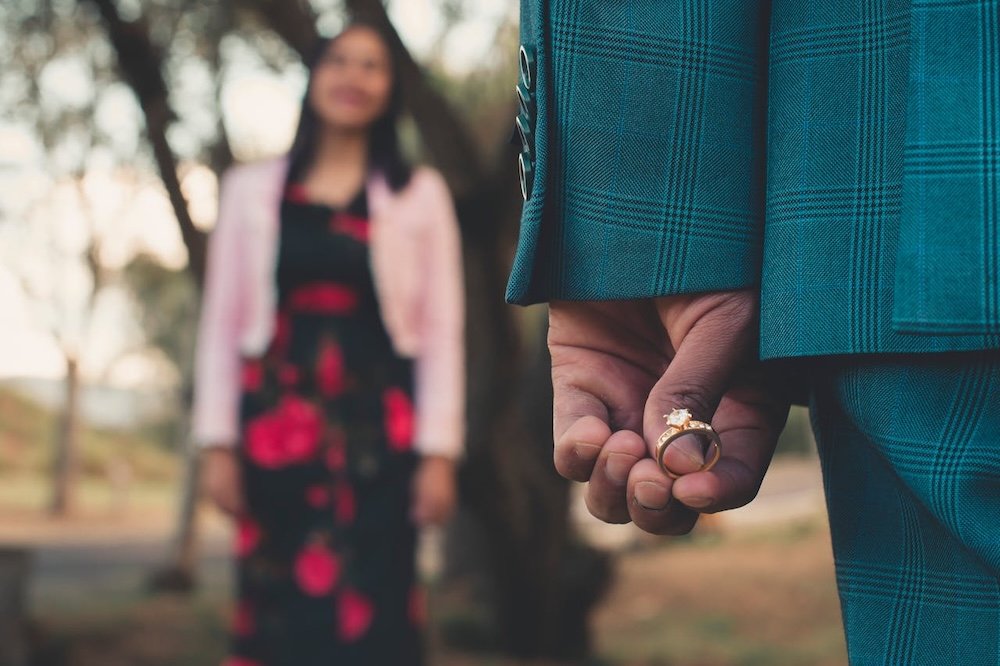
Photo by Jesus Arias on Pexels
Choose Your Style
Finding jewelers who source ethically produced metals and gemstones is essential, but first, you need to know what style you’re looking for. That will point you toward jewelry shops that specialize in your preferred designs. For instance, Valerie Madison is an independent company known for its timeless fine jewelry, featuring unique designs with modern sophistication, made with ethical and sustainable materials and craftsmanship.
What kind of style is your preference? Examples include:
- Antique settings
- Simple but elegant looks
- Vintage, romantic rings
- Three-stone settings
- Modern styles
- Unique designs
With that decision in mind, it’s almost time to start shopping for jewelers who offer ethical rings designed to your tastes. But first, another vital part of your ring style is the metal that holds your gems.
Choosing the Right Metal for Your Ring
The metal used to make your engagement ring should complement the design of the gems. Platinum and gold are the two most popular metals, but they’re not for everyone. These metals work well because they are durable and hold up to active lifestyles and wear and tear. But, although you may usually prefer a particular metal, it might not be the ideal match for the stones and setting you’ve set your heart upon.
Let’s look at the different types of metal used to make jewelry and what it is (and isn’t) ideal for:
- 24k yellow gold: The most expensive metal because of its high gold content, this isn’t always the best material to use for jewelry. 24k yellow gold is very soft and bright, making it ideal for the occasionally worn piece that is tucked away in a jewelry box and well-maintained, but not so ideal for engagement rings.
- 18k yellow gold: The purest form of gold (and, therefore, pricier), this durable metal is often used in rings and other jewelry pieces. 18k yellow gold pairs well with rubies, blue sapphires, and emeralds — vibrant hues with depth. Diamonds are also excellent partners with 18k yellow gold. However, the warmth of this metal can overpower pastel stones.
- Platinum: This metal is stronger and more durable than gold, and it has surpassed 18k in price for many rings. But the platinum band has a bright white luster that enhances nearly any stone and setting.
- 14k yellow gold: An excellent alternative to 18k, 14k yellow gold is durable but more affordable. This type of metal pairs well with most stones, especially those with bold, vibrant shades like rubies and emeralds. It’s the traditional metal for diamonds, too, which softens the warmth of the gold.
- White gold: With the same purity and karatages as yellow gold, white gold is the perfect alternative for a durable, long-lasting metal that needs to complement a modern look with pastel stones. White gold is often used as a more affordable alternative to platinum.
- Rose gold: Ideal for a romantic style, rose gold has the same purity and karatages as yellow gold. Copper is added to the metal to help it achieve that rosy look.
Other metals, such as sterling silver and tungsten, are also used to make jewelry, but they’re not as commonly seen when crafting long-lasting engagement rings.
Look for Jewelers With Transparent Processes
You have your style down, and you know the metals that will complement it best. You’ve earmarked a budget, and you want a jeweler who checks all those boxes, plus is dedicated to ethically sourced craftsmanship from start to finish. Sounds like you might be asking for the moon, right? Not really — it’s all in how you search for your jewelry company.
Look for jewelers with transparent processes who specialize in your style and metal. Review their website or visit the store in person to see if they match what you’re looking for. When you find a ring you love, ask for documentation that shows that the metal and gemstones were ethically sourced.
For diamonds, this will probably be the Kimberley Process Certification Scheme (KPCS). Metals may have the Fairmined or Fairtrade Gold Certification. The jeweler should be happy to provide origin mapping and evidence of third-party audits of all their material.
The Demand For Ethical Living is in Jewelry, Too
With a global focus on sustainability and ethics, it isn’t hard to find jewelry stores committed to these practices, too. This demand means you never have to compromise on style to find an ethical engagement ring. Let that be the least of your worries, and use these tips to go find the ring that will be a symbol of your love story for the ages.
She Owns It partners with others through contributor posts, affiliate links, and sponsored content. We are compensated for sponsored content. Our disclosure page outlines the details. The views and opinions expressed reflect those of our guest contributor, interviewee, or sponsor. We have evaluated the links and content to the best of our ability at this time to make sure they meet our guidelines. As links and information evolve and change, we ask that readers do their due diligence, research, and consult with professionals as needed.
The publication of Content on the site does not constitute an endorsement by She Owns It. If you have questions or concerns about any content published on our site, please let us know. We strive only to publish ethical content that supports our community. Thank you for supporting the brands that support this blog.