This post may contain affiliate links and/or editorial content. See our disclosure statement for details.
Washington’s construction sector carries real risk. From multi-story commercial builds in Seattle to residential remodels in Spokane, a single uninsured incident can cost a contractor far more than the project was ever worth.
Most Washington contractors carry at least one or two policies, but gaps in coverage are where financial disasters actually happen. Reviewing the full picture of what your business needs – and what it’s missing – is one of the most practical steps you can take before your next project kicks off.
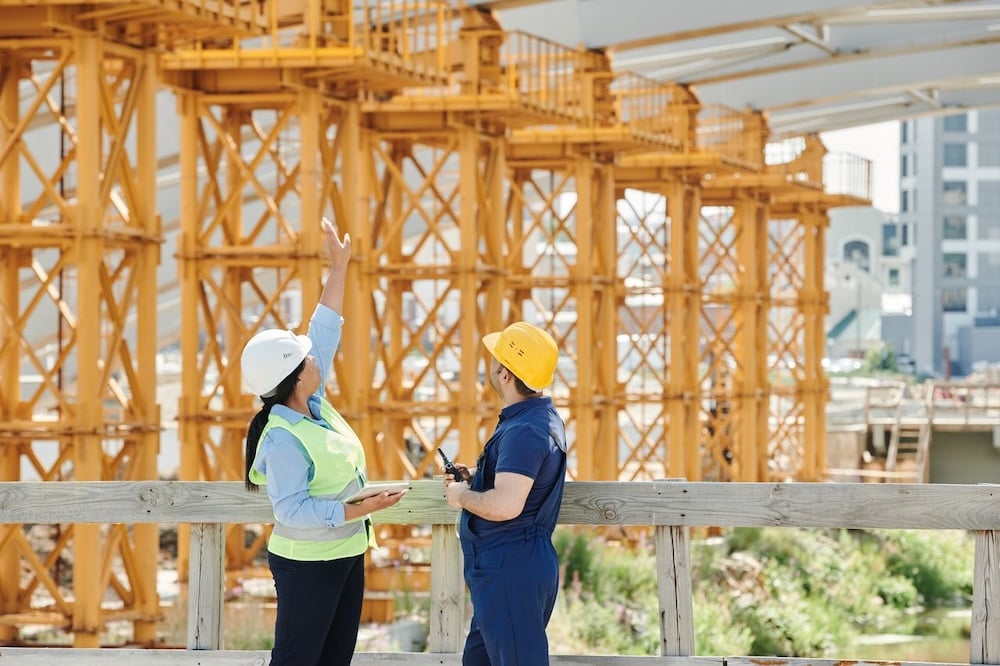
Photo credit: Mikael Blomkvist on Pexels
1. General Liability Insurance
General liability is the baseline policy every Washington construction business needs. It covers bodily injury and property damage claims that arise from your work, and most project owners and general contractors want proof of it before they’ll let you set foot on-site. When contractors research Florida construction project coverage as a comparison point, they often notice how closely the liability thresholds mirror Washington’s own contractor licensing requirements, a useful benchmark when you’re deciding where to set your limits.
Washington contractors must carry general liability coverage to keep their state license in good standing with the Department of Labor and Industries. A $1 million per-occurrence limit is the standard starting point, but commercial or public work projects frequently demand $2 million or more. Don’t just check the legal minimum. Review your current limits against the actual size and scope of your active contracts, because the floor set by law won’t always protect you when a serious claim lands.
2. Workers’ Compensation Insurance
Washington is one of a small number of states that runs a monopolistic workers’ compensation system through the Washington State Department of Labor and Industries. If you have employees, you’re required to pay into the state fund – private workers’ comp policies don’t fulfill that obligation here.
But the state system doesn’t cover everything. If you work as a sole proprietor or have subcontractors, your coverage picture gets more complicated fast. Subcontractors without their own coverage can become your liability on a job site. Review your subcontractor agreements and verify that everyone working under you carries appropriate coverage, or understand exactly what exposure you’re taking on if they don’t.
3. Builder’s Risk Insurance
Builder’s risk covers a structure under construction against damage from fire, theft, vandalism, wind, and other perils before the project reaches completion. It’s a project-specific policy – meaning it typically runs for the duration of the build, then expires when the work is done.
Many Washington contractors assume the property owner’s homeowners or commercial property insurance covers an active construction site. It usually doesn’t. Standard property policies exclude buildings under renovation or new construction because the risk profile is different. So if a fire destroys a partially framed house two weeks before completion, you could be staring at a total loss with no coverage. Review who is responsible for carrying builder’s risk on each of your projects, and make sure that policy is in place before breaking ground.
4. Commercial Auto Insurance
If your crew drives trucks, vans, or trailers to job sites – and you own or lease those vehicles under the business – personal auto insurance won’t cover an accident that happens on the clock. Commercial auto insurance fills that gap and covers vehicles used for business purposes.
Washington state minimum liability limits for commercial vehicles run higher than personal auto, and there’s a clear reason for that. A loaded work truck involved in an accident can cause substantial damage fast. Review your entire fleet – including any employee-owned vehicles your crew drives for business tasks – because non-owned auto liability is a separate endorsement worth adding if your drivers sometimes run work errands in their own vehicles.
5. Tools and Equipment Coverage
Stolen tools are a chronic problem on construction sites across Washington. A single break-in at an unsecured job site trailer can wipe out tens of thousands of dollars in hand tools, power tools, and specialty equipment in one night. General liability won’t help you there. It covers damage to others, not your own property.
Tools and equipment coverage – sometimes called inland marine insurance – pays to repair or replace your owned equipment when it’s stolen, damaged, or destroyed. Many claims happen while gear’s being moved between sites, so review your policy carefully and confirm it covers equipment in transit. Also check whether high-value items like laser levels, compactors, or generators are scheduled separately or folded into a blanket limit.
6. Umbrella / Excess Liability Insurance
A serious construction accident can generate a lawsuit that blows past your general liability limits in a single judgment. An umbrella policy sits on top of your underlying liability coverage and pays out when a claim exceeds those base limits.
For Washington contractors working on larger commercial projects, public infrastructure, or high-liability environments like schools and hospitals, an umbrella policy isn’t really optional; it’s expected. Review your liability limits against the contracts you’re actively chasing. If a job requires $5 million in total liability coverage and your general liability policy tops out at $2 million, an umbrella policy is what closes that gap.
7. Professional Liability Insurance
Professional liability – also called errors and omissions insurance – protects you if a client claims your work, design input, or professional advice caused them financial harm. It’s most relevant for design-build contractors, project managers, and specialty contractors who provide consulting alongside their physical work.
Washington contractors who take on any kind of design responsibility can’t afford to treat this policy as an afterthought. A design flaw that triggers structural problems years after a project closes can produce a claim that general liability won’t touch. Review your contracts for design-related language or specifications you’re on the hook for, and ask your broker directly whether professional liability exposure applies to your scope of work.
Conclusion
Washington construction businesses face a layered set of risks that no single policy handles alone. The 7 insurance policies Washington construction businesses should review – general liability, workers’ compensation, builder’s risk, commercial auto, tools and equipment, umbrella liability, and professional liability – each target a different kind of exposure. Gaps between them are where real financial damage happens. Review your coverage at least once a year, and always before signing a contract that’s larger or more complex than anything you’ve taken on before.