This post may contain affiliate links and/or editorial content. Please read our disclosure for more information.
If you run a metal workshop, you probably feel constant pressure to hit tighter tolerances, finish jobs faster, and protect margins while still learning how new welding technologies work, how to match equipment to your real mix of parts, and how to justify large purchases that must keep paying off as volumes change; it is no surprise that many teams look at laser welders for sale with interest yet hesitate until they see practical, repeatable results on their own floor.
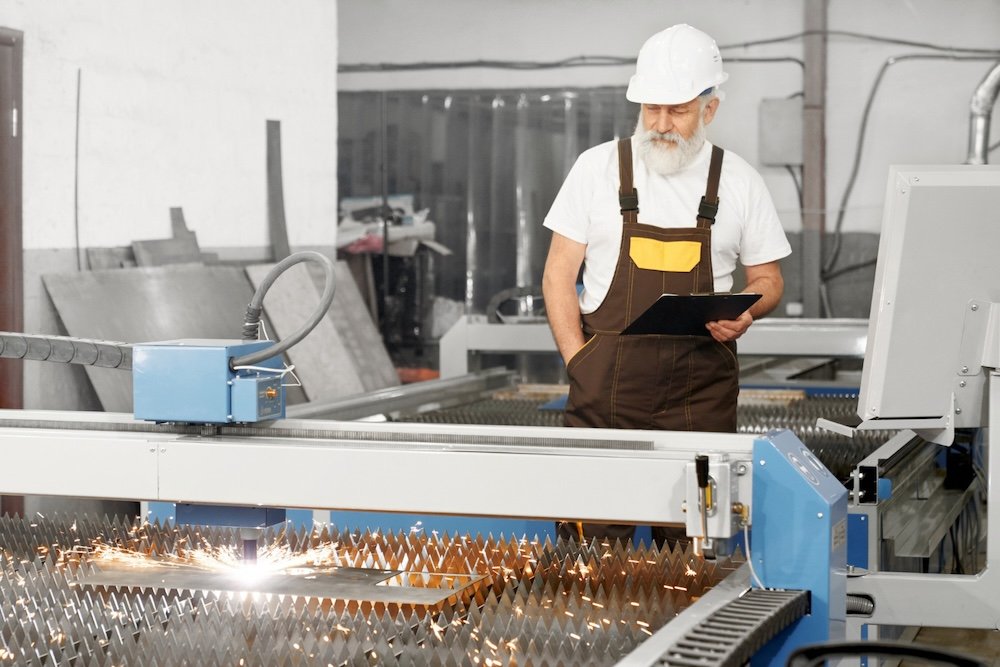
Photo credit: Freepik
Why a Specialist Partner Matters
Switching from MIG or TIG to laser reshapes your work in optics, safety, training, and documentation all at once. A focused laser-welding specialist helps you join those pieces without relying on trial and error. Denaliweld, for example, is an employee‑owned fiber laser welding manufacturer based in the Chicago area that designs and assembles its machines locally and supports customers through an international network of dealers and branches.
Why Workshops Choose Laser Welding
How Laser Welding Differs
Arc welding spreads heat widely, while laser welding concentrates energy into a small spot, resulting in narrower welds and less distortion.
Role in Prototyping and Production
Laser welding lets you tune power, speed, and focus on prototypes, then reuse those saved settings when parts reach production. When you compare different laser welders for sale, check how easily you can store and recall parameter sets.
Common Workshop Use Cases
Shops often use laser welding on stainless enclosures, aluminum frames, architectural details, repair work, and custom parts where appearance and dimensional stability matter.
Laser Welding Fundamentals
Core Principles and HAZ
A fiber laser welder focuses energy into a narrow zone, allowing faster travel with less overall heat and a smaller heat‑affected area.
Process Modes and Uses
Most workshop systems run in conduction mode for shallow welds or keyhole mode for deeper ones, with power density and speed controlling the switch.
Laser Sources and Effects
Modern fiber sources are compact and stable on steel and many aluminum alloys, but surface condition and joint design still strongly influence weld quality, so you must evaluate the whole system, not just wattage.
Handheld and Automated Options
Handheld Fiber Welders
Handheld fiber laser welders fit mixed, project‑driven work because a compact power unit and light head reach large frames and tight corners.
Air-Cooled and Water-Cooled
Air‑cooled models are lighter and simpler to install, while water‑cooled machines usually support higher duty cycles and power for thicker, long‑running jobs; suppliers such as Denaliweld offer both approaches.
Cobot and Robotic Adoption
Once handheld procedures are stable, you can copy parameters into cobot or robotic systems, so any machine you shortlist should integrate cleanly with controllers and safety circuits.
Matching Power and Materials
Power for Thin and Thick
A thin sheet often welds well at 1 kilowatt, while frequent quarter‑inch or thicker work usually needs 2 to 3 kilowatts plus good joint preparation.
Materials and Dissimilar Joints
Fiber lasers handle mild and stainless steels, as well as many aluminum alloys, though highly reflective or exotic materials may require special optics and careful testing before production.
Joint Design and Wire Feed
Tight, consistent fit‑up is essential, and adding wire feed helps bridge small gaps and tune bead profile for strength and appearance.
Safety and Operator Readiness
PPE and Safety Systems
Laser welding demands proper eye protection, appropriate clothing, guarded areas or curtains, and regularly checked interlocks to keep accidental exposure extremely unlikely.
Layout, Ventilation, and Reflections
You should avoid shiny surfaces near the beam, provide fume extraction similar to that for arc welding, and position the machine so operators can see clearly while staying safe.
Training and Digital Tools
Training must link control changes to weld results, while vendor manuals, parameter charts, and short internal guides give new operators reliable starting points.
Control Systems and Quality
Parameter Libraries and Tuning
Preset parameter libraries for common materials speed setup, but you still fine‑tune travel speed, focus, and wire feed to reach your preferred balance of speed and penetration.
Interface and Connectivity
A clear interface, simple controls, and basic data logging or network connectivity reduce errors and make it easier to trace parameters during troubleshooting or audits.
Monitoring and Documentation
Monitoring alarms, interlocks, and key process values, then tying them to inspection records, turns each new job into a documented, repeatable quality loop instead of guesswork.
Cost and Deployment Strategy
Assessing Purchase and Rental
When you compare laser welders for sale, weigh ownership, rental, and lease options against cash flow and workload, using rentals or demos to prove value on real jobs.
Direct and Indirect Costs
You must consider machine, installation, and safety upgrades alongside savings from reduced distortion, less rework, shorter finishing time, and easier automation of stable jobs.
Planning Future Upgrades
Choosing controls, fixtures, and workflows that can support additional handheld units or future cobot cells helps you scale without starting from zero.
Checklist For Laser Welders
Matching Tools to Needs
List your most common materials, thicknesses, and joint types, then rule out machines that cannot handle those daily requirements.
Comparing Spec Sheets
Use spec sheets to confirm power, cooling, and safety features, but ask how the duty cycle was tested and how quickly consumables and optics can be serviced.
Validating Performance Onsite
Whenever possible, weld your own sample parts, record cycle times, and inspect results exactly as you would for real orders before making a decision.
Roadmap To Stable Production
Piloting on Real Parts
Begin with a pilot on a small family of parts, documenting parameters, joint preparation, fixturing, and inspection results so success can be repeated.
Documenting Procedures and Pitfalls
Turn pilot experience into concise procedures and notes on common problems, such as reflections, contamination, or poor fit‑up, so future jobs avoid the same mistakes.
Scaling while Staying Flexible
As volumes grow, add a second handheld unit, dedicate a station, or develop a cobot cell with help from Denaliweld or another specialist while still leaving room for new parts.
Conclusion
Laser welding is no longer reserved for niche industries or huge factories. With thoughtful planning, you can use modern equipment, clear procedures, and expert support to improve quality, reduce rework, and maintain healthy margins. By weighing laser welders for sale against your own parts, operators, and automation plans, you give your workshop a realistic path from prototype to stable, flexible production.
She Owns It partners with others through contributor posts, affiliate links, and sponsored content. We are compensated for sponsored content. Our disclosure page outlines the details. The views and opinions expressed reflect those of our guest contributor, interviewee, or sponsor. We have evaluated the links and content to the best of our ability at this time to make sure they meet our guidelines. As links and information evolve and change, we ask that readers do their due diligence, research, and consult with professionals as needed.
The publication of Content on the site does not constitute an endorsement by She Owns It. If you have questions or concerns about any content published on our site, please let us know. We strive only to publish ethical content that supports our community. Thank you for supporting the brands that support this blog.