Not long ago, working in the air felt like an impossibility. Unreliable coverage, the horrors of airplane mode, and Wi-Fi that collapses the moment you try to join a video call are inconveniences we’re all far too familiar with. For executive travel, that gap between the office and the cabin represented precious lost time, delayed decisions, and heightened risk when teams tried to move sensitive work onto personal hotspots or unsecured connections.
Today, however, the aircraft cabin can operate like a true mobile workspace thanks to satellite connectivity delivering the bandwidth, reliability, and latency needed for modern workflows. Services such as Starlink Aviation are explicitly positioned around high-speed, low-latency connectivity that supports real-time applications in flight.
For organizations using a business jet charter as part of corporate travel strategy, this shift turns dead time into productive, secure time without forcing teams to compromise on the tools they rely on.
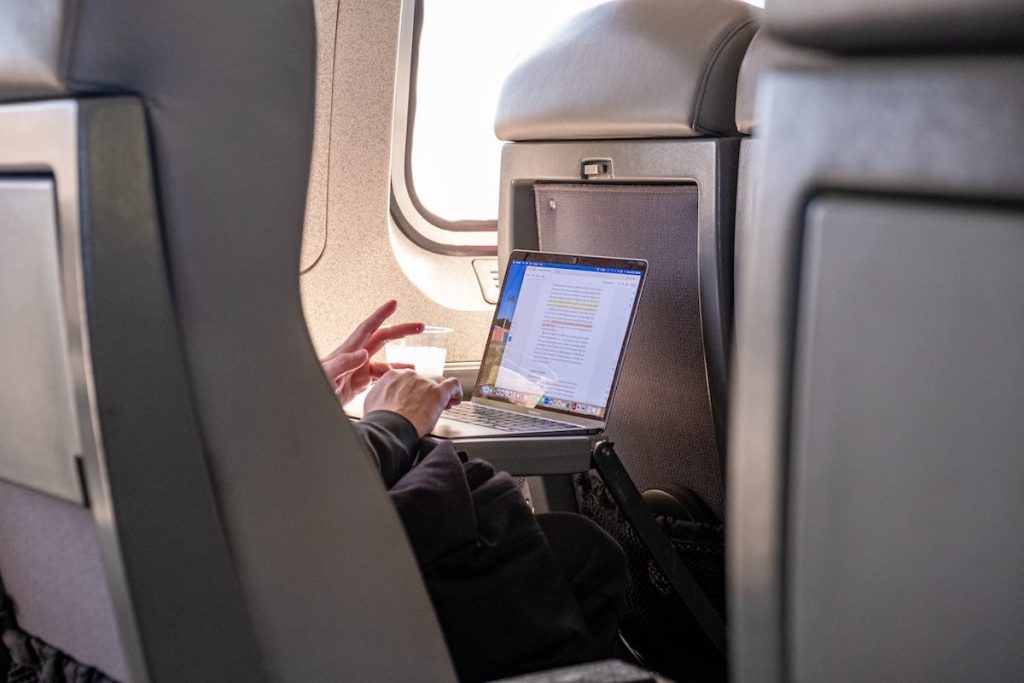
Photo by Terrence Henry on Pexels
Bridging the connectivity gap
The old inflight experience was shaped by geostationary (GEO) satellite systems: a single satellite far above Earth, longer signal travel distance, and higher latency. That architecture can be workable for basic browsing and email, but it struggles with the kind of latency-sensitive, bandwidth-heavy tasks that modern business travel demands. GEO’s higher latency and constrained bandwidth can hinder user experience, particularly for interactive applications. The net effect is simple: the cabin used to feel like a disconnected bubble. Now, it increasingly feels like an extension of the office network.
The shift to Low Earth Orbit
Low Earth Orbit (LEO) constellations are the technical leap that makes “seamless” airborne productivity realistic. Because LEO satellites sit much closer to aircraft than GEO satellites, latency is materially lower, which is the difference between a stilted, delayed call and a meeting that feels normal. Starlink’s aviation offering is built around LEO connectivity, and its positioning explicitly focuses on enabling latency-dependent activities (like video calls) and higher-throughput usage in motion. Independent academic work on Starlink inflight performance similarly frames LEO as a break from traditional inflight connectivity constraints.
From a workflow standpoint, lower latency unlocks the things executives need inflight:
- Live video conferencing without constant lag
- Cloud applications that don’t time out
- Real-time collaboration on shared documents
- Stable messaging and VoIP for distributed teams
Enterprise-grade security in transit
Fast Wi-Fi is only valuable if the connection can be made private, controlled, and audit-friendly. For any organization handling M&A conversations, legal documents, financial reporting, or IP, inflight security needs to mirror corporate standards.
At minimum, that means:
- Encrypted tunnels (VPN) for sensitive workflows
- Strong authentication and access controls
- Segmented networks (so passenger devices and non-critical systems are separated from more sensitive onboard domains)
Optimizing an aerial workflow
The final performance gains often come from preparation, especially for organizations that want inflight time to count.
Before departure, teams can:
- Sync key folders for offline fallback (and reduce bandwidth spikes)
- Standardise meeting settings (camera defaults, background processing, updates paused)
- Prioritise collaboration tools that behave well over variable networks
- Confirm VPN and MFA workflows are stable on all devices
- Align “inflight meeting windows” with time zones and expected coverage periods
If the goal is to land with decisions made (not just emails answered), inflight connectivity should be treated like any other business-critical system: configured, tested, and integrated into the organization’s working rhythms.
She Owns It partners with others through contributor posts, affiliate links, and sponsored content. We are compensated for sponsored content. Our disclosure page outlines the details. The views and opinions expressed reflect those of our guest contributor, interviewee, or sponsor. We have evaluated the links and content to the best of our ability at this time to make sure they meet our guidelines. As links and information evolve and change, we ask that readers do their due diligence, research, and consult with professionals as needed.
The publication of Content on the site does not constitute an endorsement by She Owns It. If you have questions or concerns about any content published on our site, please let us know. We strive only to publish ethical content that supports our community. Thank you for supporting the brands that support this blog.