This post may contain affiliate links and/or editorial content. Please read our disclosure for more information.
I measured my living room three times before buying a sofa. It still blocked the hallway by 140 mm.
That mistake cost me a restocking fee, a wasted Saturday, and a bruised shin every morning for two weeks.
Most furniture regrets are not taste failures. They are fit failures. The scale is wrong, the clearance is too tight, the chairs do not tuck in, or the desk setup ignores basic ergonomics, which means it does not support safe, comfortable posture.
If you work from home, the stakes rise again. A dining table may host client calls, the spare room may store stock, and office shelving may need to hold files, samples, and a ring light without taking over the floor.
Good choices rest on four checks: room clearances in millimetres, task comfort, safety rules, and material claims you can verify before you pay.
Measure first. Buy once. Keep each piece long enough to justify the space it takes.
Set Non-Negotiables Before You Shop
The best-looking piece is the one that fits how you live, move, and work.
- Protect circulation. Aim for 900 to 1,100 mm around dining tables. In tight plans, 600 mm is the hard minimum.
- Get desk height right. Fixed desks usually sit between 680 and 720 mm, with the monitor about an arm’s length away.
- Match chair and table geometry. Dining chairs need a 430 to 500 mm seat height and 250 to 300 mm of thigh clearance.
- Size the bed to the sleeper. Choose a mattress 10 to 15 cm longer than the tallest person and leave 600 to 760 mm beside it.
- Treat tip-over safety as essential. The ACCC tip-over information standard took effect on 4 May 2025, so tall units should be anchored.
- Verify sustainability claims. Ask for FSC or Responsible Wood and PEFC certificates, plus low-VOC finish or adhesive information.
These numbers are not styling rules. They are the baseline that lets style work in daily life.
Measure Space, Use, And Lifespan First
A quick fit test catches most expensive mistakes before checkout.
Space comes first. Mark the footprint with painter’s tape or flattened cardboard, then test door swings, traffic lanes, and drawer pull-outs. Measure skirting boards, power points, window sills, and stair turns in millimetres, not rough guesses.
Use comes next. List who will use the piece, how often, and what stress it will handle, such as pets, direct sun, spills, or video calls. A once-a-month guest chair can be slimmer than the chair you sit in for eight hours a day.
Lifespan is the last filter. Solid timber that can be re-oiled, slipcovers that can be replaced, and warrantied components usually age better than sealed surfaces that cannot be repaired. Under Australian Consumer Law, goods must meet consumer guarantees, and major failures can lead to a repair, replacement, or refund.
Keep The Living Room Easy To Move Through
Clear walkways matter more than squeezing in one more seat.
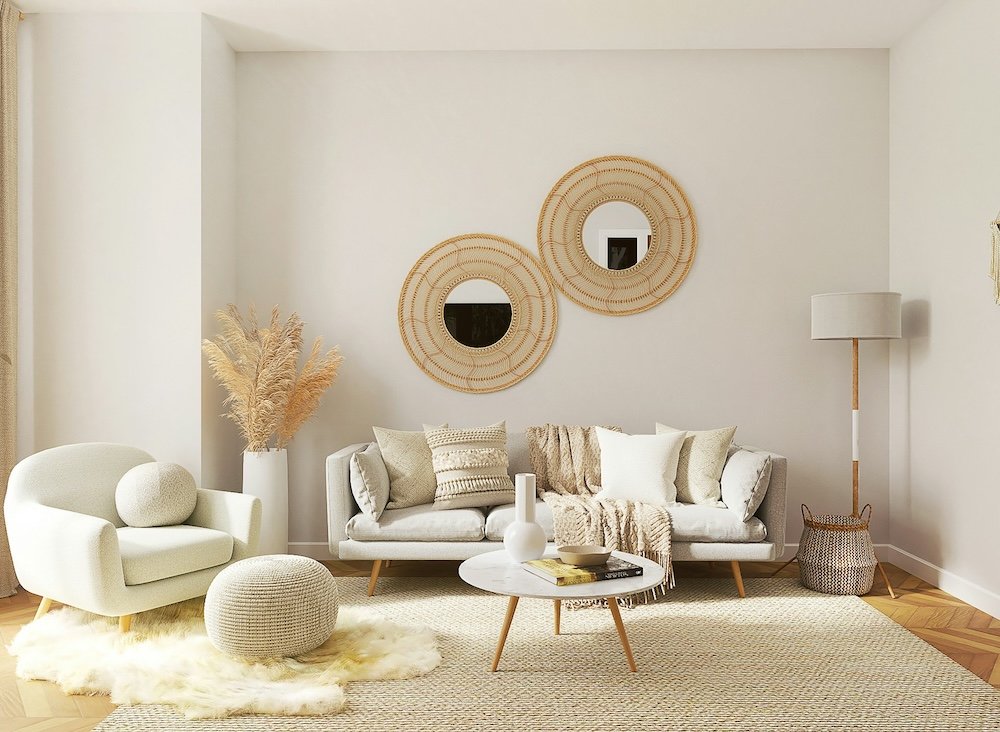
Photo by Spacejoy on Unsplash
For main paths, aim for 800 to 1,000 mm and avoid pinch points below 600 mm. Leave about 450 to 500 mm between the sofa and coffee table so people can pass without twisting sideways.
Size the sofa to the wall, but also to the room’s entry points. Measure the hallway, door width, stair landing, and lift car before delivery day. A modular sofa can solve access issues, but only if each section fits the route.
For TV comfort, place the centre of the screen close to seated eye level and plan power and cable management before final placement. When comparing frames, a hardwood structure with quality joinery and high-resilience foam will usually hold shape longer than softwood held together with staples.
Build The Home Office Around Ergonomics
Comfort at desk height protects focus as much as it protects your neck.
RMIT workstation guidance places most fixed-height desks at 680 to 720 mm measured to the top of the surface, and a good task chair should offer lumbar support, a seat height adjustment range of around 400 to 550 mm, and ideally AFRDI certification for tested durability. Once the desk height is right, it helps to discover shelf organiser solutions that keep files, stock, and peripherals within easy reach.
Set the top of the monitor at seated eye level and keep the screen roughly an arm’s length away. Your keyboard, mouse, notebook, and headset should sit in the primary reach zone, which means you can reach them without leaning forward.
If the same room also stores business supplies, separate work tools from stock. Daily items belong at elbow height. Archive boxes, packaging, and seasonal items can move higher or lower so the desktop stays clear for actual work.
Use Vertical Storage To Free Up Work Surfaces
Storage works best when it clears the desk instead of crowding it.
When floor space is tight, wall height can turn into zones for daily tools, reference material, and rarely used stock. That is usually more effective than adding another broad desk or drawer unit.
Before buying, measure alcove width, full height, skirting depth, and any outlets that could be blocked. Check shelf increments, weight limits, and whether the unit needs wall anchoring on your wall type.
Keep the heaviest items on the lowest shelves, reserve middle shelves for what you touch every day, and leave the top shelf for archives or display pieces that do not need constant access.
Make The Bedroom Easy To Sleep In And Easy To Walk Through
A calm bedroom starts with bed size, storage, and circulation that fit the room at the same time.
An Australian Queen mattress measures 153 by 203 cm, and retailers commonly suggest choosing a mattress 10 to 15 cm longer than the tallest sleeper. Around the bed, allow 600 to 760 mm for normal side clearance, or closer to 900 mm if wheelchair access or easier shared movement matters.
Think beyond the mattress size. Bedside tables need space for drawers to open, wardrobes need room for doors or sliding panels, and under-bed storage needs a full pull-out path. In a tight room, one tall dresser may work better than two wide bedside tables because it uses vertical volume instead of floor width.
Storage should reflect what you actually own. If your wardrobe is mostly folded knitwear and shoes, more shelves and fewer long-hang sections make sense. If it is mostly dresses, coats, or uniforms, a higher hanging rail matters more than extra drawers.
Check charger access, lamp height, and window placement before choosing a tall bedhead or deep bedside table. A low bed can calm a small room visually, but not if it makes getting up harder on your hips or knees.
Material choices matter here because bedrooms are close-contact spaces. Ask about finish emissions, especially volatile organic compounds, or VOCs, which are chemicals that can off-gas into indoor air. Low-VOC finishes and adhesives aligned with GECA limits can reduce that load, while solid timber or repairable joinery gives you better odds of keeping the piece for years.
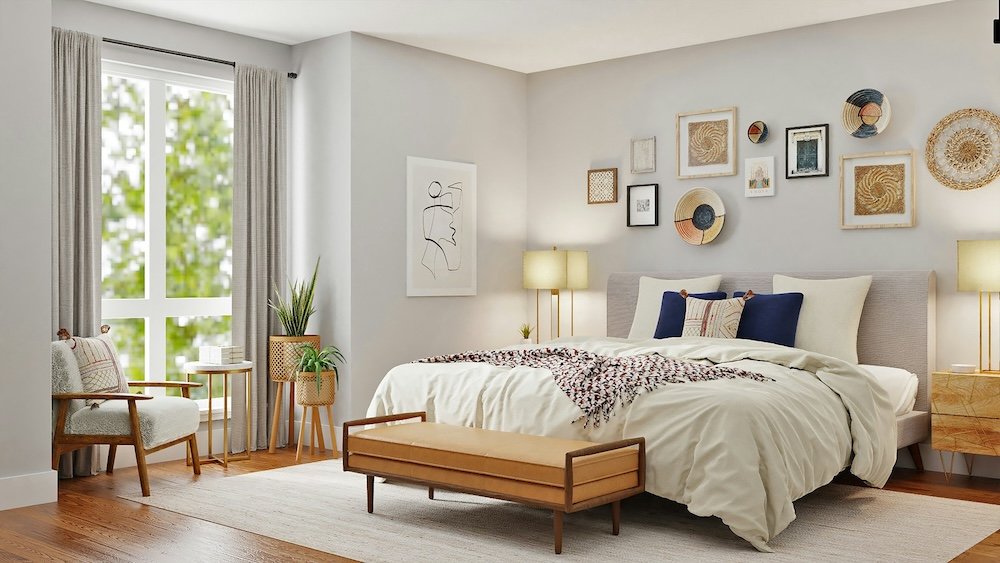
Photo by Spacejoy on Unsplash
Choose A Timber Bed Frame You Can Keep For Years
A bed frame should support the mattress, the room layout, and years of use.
Look for a centre rail on Queen and King sizes, stable slat spacing that matches your mattress warranty, and joinery that can be tightened or repaired if needed. Some padded bases look soft, but bulky sides can steal useful clearance in a smaller room.
If you are weighing custom work against a ready-made frame, compare the outside dimensions, bedhead height, slat support, finish options, and whether the surface can be refinished after scratches or sun fade. It also helps to review standard Queen or King measurements, local sizing details, and lead times before you shop timber bed frames in Australia for a room that still needs easy side clearance.
Locally made custom pieces can take about six to eight weeks, so line up the order well before a move or renovation.
Prioritise Safety In Kids’ Rooms And Shared Spaces
Tall furniture must be anchored, especially where children play, sleep, or visit.
Australia’s mandatory information standard for toppling furniture took effect on 4 May 2025. At least 28 people, including 17 children under five, have died from furniture and TV tip-overs since 2000. Anchor every tall bookcase, dresser, and TV unit with the supplied kit, keep the heaviest items low, and avoid putting toys or remotes where a child may climb to reach them.
If you rent, ask the property manager about safety fixes early. In Western Australia, New South Wales, and Victoria, tenancy rules make it easier for renters to secure furniture to walls for safety.
Pick Materials You Can Verify And Maintain
Good materials last longer when their performance claims can be checked.
For timber, the Janka scale measures how much force it takes to dent wood. Spotted gum sits around 10.1 kN, while Tasmanian oak ranges from 4.5 to 8.0 kN. Solid hardwood is ideal when you want repairability, while high-quality veneer on a stable substrate can be the smarter choice for wide panels because it resists warping.
For upholstery, the Martindale rub count is a lab test for abrasion. A rating of at least 25,000 suits heavy domestic use, which matters if the piece doubles as family seating and work seating. Wool blends and performance polyester can both work well, but look at pilling resistance, seam strength, and cleaning instructions too.
More than 94 percent of Australia’s commercial forests are covered by Responsible Wood and PEFC certification, with more than 250 chain-of-custody certificates in operation. Ask for certificate numbers instead of accepting vague green claims, and ask whether finished products or adhesives were tested to GECA furniture or emissions standards.
Plan Delivery And Consumer Rights Early
Logistics are part of fit, not an afterthought.
Before paying, measure every doorway, stair turn, corridor, and lift car on the delivery route. Ask whether legs are removed or bases are split if access is tight.
Made-to-order timber pieces can take six to ten weeks, and some Sydney makers advise about six to eight weeks for custom work. Add public holidays before you promise a move-in date.
Red flags include unrealistic timelines, vague material descriptions, missing chain-of-custody details, and no emissions information. Keep receipts and emails in case Australian Consumer Law remedies are needed.
Size The Dining Zone Around Real Clearance
A dining set only works when chairs can slide, tuck in, and stay comfortable through a full meal.
A useful rule is about 900 mm of clearance on each side of the table so people can sit, push back, and pass behind each other. In small apartments, 600 mm can function as the absolute minimum.
Most Australian dining chairs sit around 430 to 500 mm high. Aim for about 250 to 300 mm between the seat and the underside of the table so thighs have space and armrests do not catch.
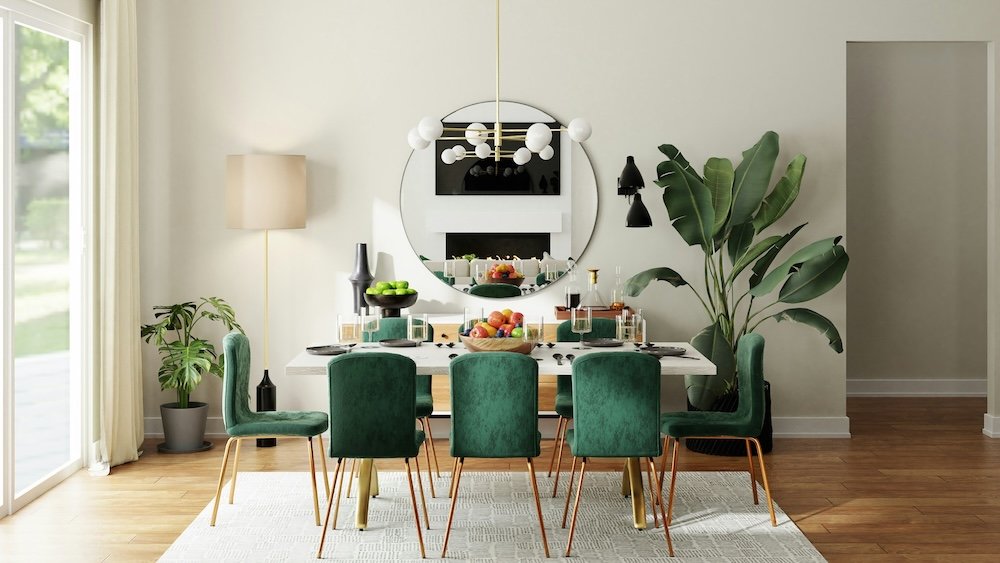
Photo by Spacejoy on Unsplash
Test Dining Chairs Before You Commit
Five minutes of seat-testing can prevent years of small daily irritation.
If you can, take your table height, apron depth, flooring type, and a quick photo of the room with you when you compare chairs in person. Seat depth, back angle, edge roll, width, and how the finish looks under showroom lighting become much easier to judge when you first decide to shop dining chairs in Sydney with real measurements in mind.
Check floor glides, how far the chair tucks in, and whether the fabric tone still works under your room’s lighting. Sit long enough to notice pressure on the thighs or lower back, not just first impressions.
Check The Final Details Before Checkout
A few last questions make sizing, comfort, and safety easier to judge.
What Rug Size Works Under A Dining Table?
Let the rug extend about 600 to 700 mm beyond each edge so chairs stay on it when pulled out.
Is Veneer A Bad Choice?
No. High-quality veneer on a stable substrate can resist warping on wide spans and cost less than solid timber.
Are Low-VOC Claims Worth Checking?
Yes, but only when backed by test data, GECA-aligned information, or a third-party emissions report.
Do Renters Still Need To Anchor Furniture?
Yes. Safety comes first, and several states now make wall-fixing for tip-over prevention easier for renters.