This post may contain affiliate links and/or editorial content and is for informational purposes only. Please read our disclosure for more information.
If you find a buzzing cluster near your home, your first instinct might be to panic or grab a can of spray. Hold that thought. Honey bees are complicated houseguests. They can help pollinate gardens and crops, but they can also build colonies inside walls, attics, chimneys, and soffits where the situation gets expensive fast. If you’re trying to protect your family, your property, and the bees when possible, it helps to know what you’re looking at and what your options actually are.
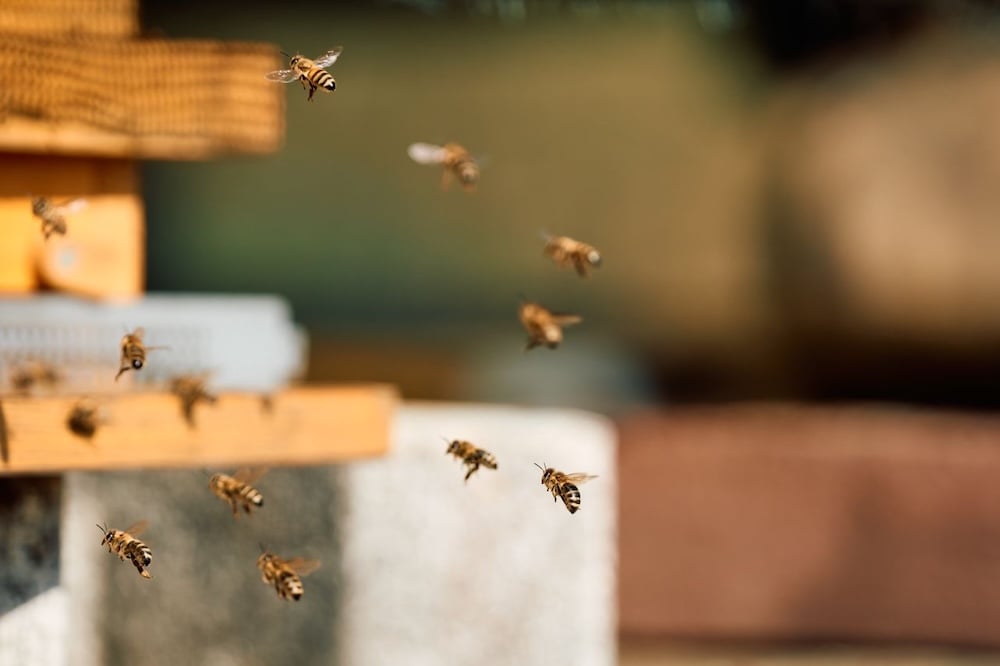
Photo credit: Robert Schwarz on Pexels
Why Honey Bees Around Your Home Aren’t Always a Simple DIY Problem
A few bees visiting flowers is normal. A steady stream of bees flying in and out of one small gap in your siding is a different story.
When honey bees settle inside a structure, they build wax comb and store honey. That sounds charming until it’s happening behind drywall. Over time, the colony can grow into the tens of thousands. The comb adds weight, trapped honey can leak, and the smell may attract ants, roaches, rodents, and other pests that see your wall cavity as an all-you-can-eat buffet.
You also need to think about safety. Honey bees are usually less aggressive than people expect, but they can sting when disturbed. That risk rises if someone accidentally blocks the entrance, mows too close, taps on the wall, or tries to remove the nest without proper equipment.
A wall full of bees is not the kind of job you fix with a can from the hardware shelf. The safest way to handle a live colony inside your home is to hire professional honey bee removal services to remove the bees and the comb in one go. A good service shows up fast and takes out the wax and honey so nothing is left to rot behind the wall.
The biggest mistake people make is treating every bee issue like a wasp issue. Sprays sold for stinging insects often don’t solve the full problem. Even if bees die, the wax and honey remain. That leftover mess can trigger a second round of headaches that costs more than the original colony.
How to Tell Whether You’re Dealing With Honey Bees or Something Else
Not every buzzing insect near your house is a honey bee, and that distinction matters.
Honey bees tend to look fuzzy and golden-brown, with darker bands on the abdomen. They usually move with purpose, especially when they’ve chosen a nest site. You may notice a repeating flight path to a single opening. Wasps, by comparison, often appear shinier, slimmer, and less hairy. Their nests also look different, often papery rather than wax-based.
Carpenter bees add another layer of confusion. They’re larger, often with shiny black abdomens, and they bore into wood instead of building a colony packed with comb and honey. Bumble bees are rounder and fuzzier, and they usually nest closer to the ground.
A useful clue is the traffic pattern. If you see dozens of insects entering the same crack every minute during warm daylight hours, you may be looking at an established honey bee colony. Swarms are different. A swarm often appears as a temporary cluster on a branch, fence, or mailbox while scout bees search for a permanent location.
If you’re unsure, take photos from a safe distance rather than getting close for a better look. Your curiosity doesn’t need to become a sting-based learning experience.
What Safe and Responsible Removal Usually Involves
Good bee removal is more than making the insects disappear from sight.
Professionals first identify the species and locate the full nest area. With honey bees, that can mean tracking the entry point and figuring out how far the comb extends inside the structure. In some situations, specialists may use live removal methods or coordinate approaches that reduce harm where possible. In others, building conditions, colony location, or safety concerns make the process more complicated.
To understand the procedure better, ask what happens after the bees are removed. That part matters a lot. Proper cleanup may include removing comb, honey, dead bees, and contaminated materials. It may also involve sealing entry points so another colony doesn’t move into the exact same cavity next season.
You should also ask whether repairs are included. Accessing a colony in a wall or soffit sometimes requires opening parts of the structure. If nobody discusses cleanup and exclusion, you’re not getting the full picture.
A quick removal that skips those steps can leave you with stains, odors, and another pest issue waiting in the wings.
When You Should Call a Professional Instead of Trying to Handle It Yourself
Some situations leave very little room for trial and error.
Call a professional right away if bees are entering your home through vents, wall gaps, attic spaces, fireplaces, or rooflines. The same goes for large visible clusters that stay in place for more than a day or two, especially if anyone in your household has a known allergy to stings.
You also shouldn’t handle it yourself if the colony is high off the ground or located near electrical components. Ladders, protective gear, tools, and active insects are a terrible combination when you’re improvising.
A smart response includes:
– Keeping kids and pets away from the area
– Avoiding loud vibration near the nest site
– Not blocking the bees’ entrance
– Skipping water sprays, insecticides, and smoke
– Taking clear photos from a distance for identification
If bees have already gotten inside a living space, close interior doors if possible and contact a specialist. Don’t start swatting. A single bee in the kitchen is one thing. A hidden colony behind the pantry wall is a very different plot twist.
In many cases, fast professional help prevents a smaller issue from turning into structural damage and a much larger bill.
How to Lower the Chances of Another Colony Moving In
Once bees are removed, prevention becomes the real long game.
Honey bees look for sheltered cavities that stay relatively dry and protected. Homes offer plenty of options: gaps around utility lines, loose siding, uncapped chimneys, attic vents without proper screening, and openings under eaves. If a colony has nested in your house once, the scent from leftover wax or missed honey can make the spot attractive again.
Walk the exterior of your home and check for cracks or holes bigger than about a quarter inch. Pay attention to roof intersections, fascia boards, and areas where different materials meet. Have damaged wood repaired promptly. Install appropriate screens on vents and chimneys, and make sure previous nest sites have been fully cleaned before they’re sealed.
A few practical habits help too:
– Inspect outbuildings, sheds, and detached garages each spring
– Watch for repeated bee traffic near one opening
– Trim vegetation that hides wall gaps or roof access points
– Address moisture damage that weakens building materials
You don’t need to turn into a backyard detective. You just need to notice patterns early. A couple of scout bees checking a cavity is much easier to deal with than a fully established colony stocked with comb, honey, and thousands of roommates.
A Smart Response Protects Both Your Home and the Bigger Picture
Honey bees play an important role in pollination, and that matters for gardens, farms, and food systems. At the same time, a colony inside your house is not a conservation project you should manage with optimism and a ladder.
The most practical approach balances both realities. Take the activity seriously, identify the insect correctly, and choose a removal path that deals with the colony and the mess it leaves behind. That protects your home from secondary damage and helps avoid unnecessary harm caused by panic-driven DIY attempts.
If you ever spot a suspicious flight path near your roofline or hear a steady hum inside a wall, treat it as a property issue with ecological stakes, not just a random nuisance. A calm, informed response usually saves money, reduces risk, and keeps the situation from snowballing into something far more complicated than a few bees in the yard.