The information and opinions published represent the views and opinions of the interviewee and do not necessarily represent the views or opinions of She Owns It. The publication of Content on the site does not constitute an endorsement by She Owns It.
After years of struggling with infertility, Shibani Baluja promised herself that if she was lucky enough to become a mom, she’d always do her best for her kids, and when her son was born, she did exactly that.
Shibani spent more than a decade climbing the ranks at Kraft Foods, and much of it quietly battling infertility and reassessing the very products she was helping bring to market. When she finally became a mom, the disconnect hit hard: despite the endless choices on the shelf, with the knowledge she had gained during her infertility struggle, there was nothing that she felt good about feeding her son. So she made a bold move and walked away from big food to create what she couldn’t find … fresh, flavorful, vegetable-forward meals for babies & toddlers.
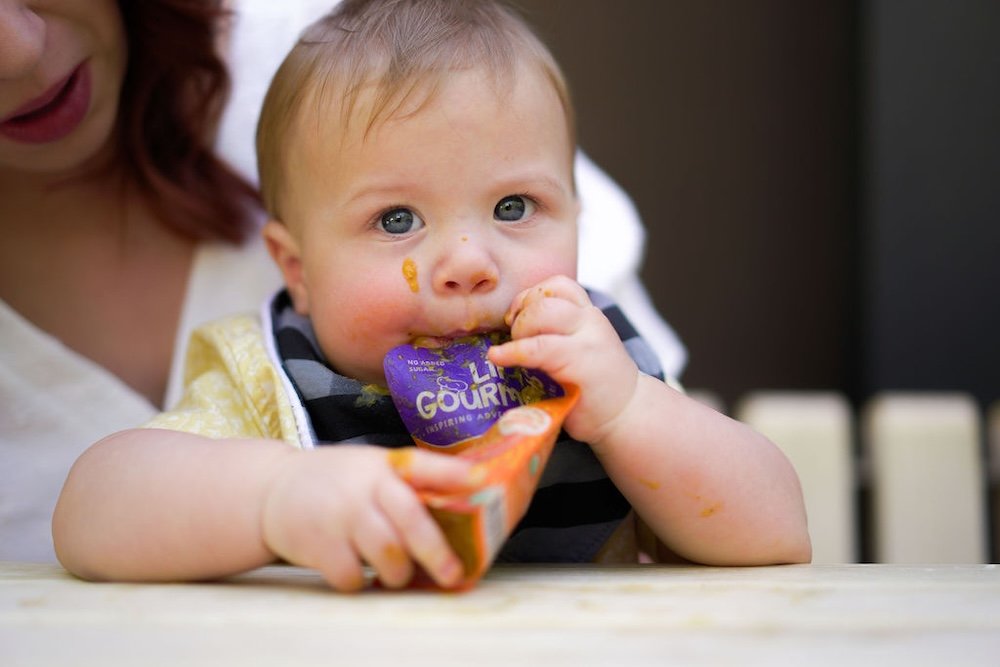
That turning point led to Lil’ Gourmets — a brand built on the belief that little ones deserve better food, rooted in infant nutrition research, and parents deserve convenience without compromise. Lil’ Gourmets is veggie-first, globally inspired, fresh & refrigerated, and crafted to help kids fall in love with vegetables and bold flavors from the very first bite. If you’re a parent trying to raise a healthy, adventurous eater but mealtime feels like a battlefield of sugar-filled snacks and untouched veggies, Lil’ Gourmets is here to help
Takeaways:
Baby Food was one of the only industries that did not have a Fresh option. We had fresh pet food, fresh pasta, fresh salsa, but no Fresh Baby Food. That was a testament to the Baby Food industry and how they convinced us that baby food just didn’t matter. By 2015, though, over 50% of parents were either not purchasing shelf-stable baby food or, if they were, they didn’t feel great about it.
Starting solids is a critical time for development and can help shape a child’s food preferences for life. Starting with veggies and developing an acceptance or love of veggies helps reduce the risks of obesity and diet-related disease.
90%+ of baby food sold in retail today is shelf-stable, and until the last couple of years, refrigerated baby food only existed in a few hundred stores.
We have a window of opportunity to shape our kids’ eating preferences and squash picky eating, so we need to stop masking the taste of veggies with fruit or over-process food to the point that it doesn’t taste like the actual vegetables.
85% share of baby food is owned by Big Food companies, which have deep pockets and high brand awareness. They are able to market and sample with resources we do not have, and also drive up customer acquisition costs.
Each day, my conviction grows stronger and stronger, and I am thrilled about the impact we can have on children’s health and inspiring healthy & adventurous eaters. Being able to provide fresh & convenient veggies at home, at daycare, as a lunchbox snack, on the soccer field, or while traveling is so exciting to me, as a mom & a business owner.
“Whether I fail or succeed with Lil’ Gourmets, I hope my kids have learned to chase their dreams, not accept status-quo, to fight for equality even when you may be in a place of privilege, and that failure is a lesson, not something that defines us.” – Shibani Baluja
We’d love to hear your story and learn more about how you got to where you are today.
Before being consumed by creating healthy food for kids, I spent over a decade at Kraft Foods as a Director on their Mergers & Acquisitions team. I led a number of acquisitions, divestitures, and other strategic initiatives. I went to the University of Michigan for both my undergrad and graduate degrees and bleed blue. I live in Chicago with my husband, Mike, and children, Jayden and Mira (Lil’ Gourmets Chief Tasting Officers!).
Food and culture have always been a big part of my life.. My parents started one of the first Indian restaurants in Michigan, and I spent my adolescent and college years helping to grow that business. After graduate school, I joined Kraft Foods, where I spent the bulk of my career in Mergers & Acquisitions. I studied consumers and trends and became very skilled at identifying what was coming into favor and what was at risk of bursting. At the same I was going through an extended infertility battle that began to teach me about the power of food and food as medicine. These life experiences and medical research led me to find my passion and purpose and launch Lil’ Gourmets.
My long struggle with infertility led me to eliminate all processed foods from my diet. Once I became a mom, I realized the baby food aisle was filled with the same over-processed foods. That irony and the promises that I made to my future kids if I ever had them, gave me no choice but to cook my kids’ meals. In doing so, I focused on introducing them to a variety of veggies and making them delicious with spices. As they became toddlers, I witnessed them develop a love of flavorful foods and veggies, and an aversion to over-processed and bland foods.
It was then I learned that we have a window of opportunity to shape our kids’ eating preferences and squash picky eating … but we needed to not mask the taste of veggies with fruit or over-process food to the point that it doesn’t taste like the actual ingredients. I realized that the baby food industry was contributing to our kids preferring processed foods and being picky eaters, which was contributing to obesity, diet-related disease, and mealtime battles.
My consumer research showed how many parents are struggling to find better options for their kids. My nutrition research showed how important early foods are for our children. And with my background in food, I knew we could do better, and needed to do better, for our youngest eaters and their parents.
Lil’ Gourmets is everything I was looking for as a new mom. Our meals are 1) Veggie-rich, with each one delivering 100% of a baby’s daily veggies 2) Fresh & organic: We minimally process our meals so we can deliver the taste, texture, and nutrition of a homemade meal. And 3) Globally-inspired to both make the meals delicious and to inspire healthy & adventurous eating for life, all while giving parents a convenient option that they feel great about feeding their kids.
With the early introduction of veggies, we strive to change kids’ perception of veggies from something they have to eat to something they LOVE to eat … while providing all the health benefits that come from cleaner and healthier eating into adulthood. And by introducing global flavors and global cultures early on, we strive to increase acceptance and appreciation of diversity and a curiosity about the world.
For too long, we’ve had to sacrifice taste or nutrition for convenience for our lil’ ones. Lil’ Gourmets is changing that with the trifecta of nutrient-density, delicious taste, and a fresh take on convenience. We are starting with our youngest eaters to deliver nutrients their bodies and brains need, while inspiring a lifetime of healthy & adventurous eating. 100% research-based with the best for baby in mind.
We’d love to learn more about how you got to where you are today.
It has been a long journey full of more downs than ups to get to where we are today. But where we stand today, we are thrilled with our prospects for the future!
I left my role at Kraft Foods in October 2015. And filed paperwork for Lil’ Gourmets, LLC on November 3, 2015. I naively said to my husband, “Give me 6 months to figure out if this is something I should pursue, and if not, I’ll start my next job search.” The next 3 years were spent getting to launch. I went through a period of co-packers telling me I could not get to a fresh, clean-label, vegetable-heavy product, and I needed to add powders or preservatives to get there. Instead, I tinkered in my kitchen for months until I had a product that tasted great, had the nutritional and flavor profiles I was looking for, and only utilized ingredients you’d find in a kitchen, while still meeting the technical requirements needed to not have to over-process the food (and having my 2nd child during that process!). I went back to the co-packers and spent the next two years still trying to get to launch. Every day brought a new challenge to solve. Finally, in July 2018, we launched! From there, we continued to be 1 step forward and 2-3 steps back.
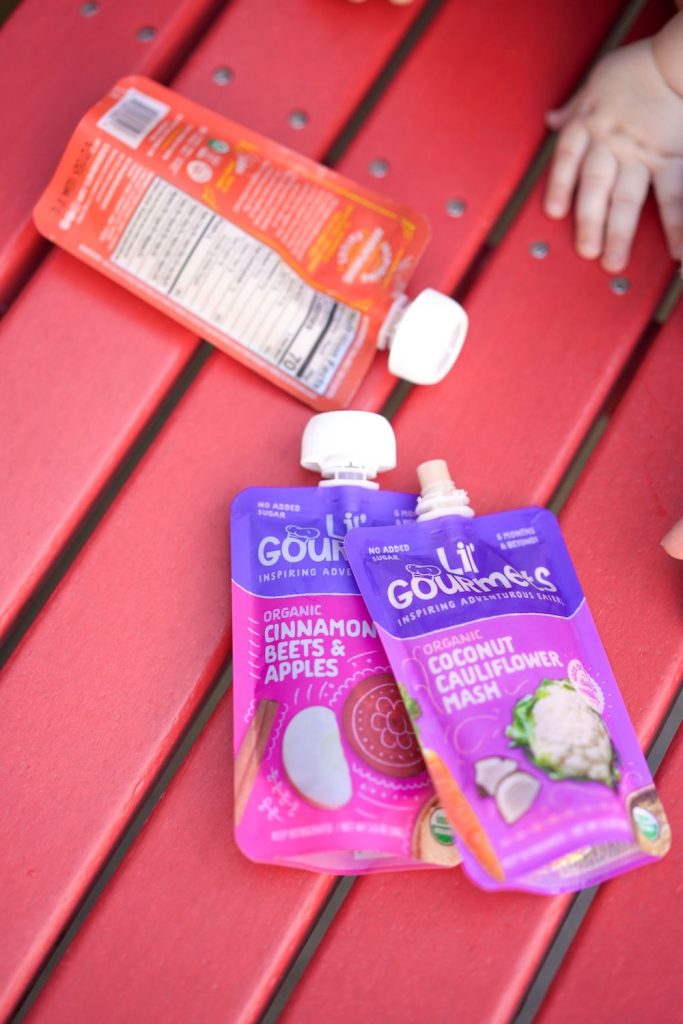
We survived COVID with a startup and young children, but we were not thriving. About 5 years post-launch, I had to admit the business wasn’t where it needed to be. I started reaching out to consumers to ask questions, and I listened. And I realized that our packaging in a cup was holding us back. Parents (and kids) loved our products, but our cups made them too messy to use as often as they wanted. We solved one chore of cooking, but created another in cleaning. Plus, their greatest pain points were on-the-go and with toddlers, and our format limited how much we could help there. I also studied market data and realized we were trying to grow a brand in a declining format, vs trying to grow a brand in a growing format. And that was not a recipe for success
From making the decision to convert from a cup to a pouch to getting to launch was a nearly 18-month journey. We essentially had to start over and rebuild our supply chain, and we lost most of the customers that we had originally launched the cups with. But we brought on Walmart in 2025 and are expanding at a natural retailer in just a few months!
What made you decide to go into business for yourself?
I never intended on becoming an entrepreneur. I truly enjoyed my Corporate role in Mergers & Acquisitions. At the same time, my extended battle with infertility taught me about Food As Medicine and opened my eyes to the issues with over-processed food. With medical research proving a high correlation exists between our early foods and our future eating habits, I saw that we had a solution to squash picky eating, improve the health of kids (and adults!), and provide an option that parents felt good about feeding their kids. But there had been no real innovation in baby food for nearly 100 years. Almost everything on the market was fruit-first and over-processed, making it sweet or bland, and the opposite of the recommendations coming from the latest infant nutrition research.
I started doing consumer research and talking to parents to see if there were others like me. And what I found was that over 50% of parents were either not purchasing baby food or, if they were, they didn’t feel great about it. Starting solids is a critical time for development and can help shape a child’s food preferences for life, thereby reducing risks of obesity and diet-related disease. It should also be a joyful time for new parents. But the legacy baby food industry had left so many of us parents feeling like baby food was “gross” and a stage to get out of, instead of seeing all the good that can come out of it. I knew we could do better and should do better. The idea for Lil’ Gourmets nagged at me for a couple of years until I realized that I‘d always regret not trying to effect the change. So I left my corporate job and took the plunge!
How do you prioritize self-care and well-being while managing the demands of your business?
I’m still working on this. I take many of my calls while walking and get to the gym several times a week. I committed to not sacrifice family time, unless absolutely needed, so I prioritize family dinners and family activities and am generally offline each evening for a couple of hours.
In 2024, I had the opportunity to attend a retreat in Greece, no electronics, no business talk, just a focus on the power of connection within ourselves and with others, all subsidized by my alma mater. The 3-day journey was incredible and brought me so much peace and healing, especially in regards to the losses we suffered during our infertility journey.
But as a mom with younger kids, I find that I revert to my old habits of waking up and immediately getting online, so that I can ensure I can focus on my kids when they are not at school. I’d love to incorporate meditation and breath work into my days, but haven’t found the right formula for me yet. I’m open to suggestions!
What would you consider your biggest accomplishment and why?
Teaching my children to chase their dreams, not accept the status quo, to fight for equality even when you may be in a place of privilege, making mistakes is how we learn, and that failure is a lesson, not something that defines us.
Given how long and hard this journey has been, there are, of course, days when I wonder why I left my corporate job. I worked really hard there, but was also fulfilled, well paid, very comfortable, and could have helped provide a very comfortable life for our family. But given my experiences from my upbringing in restaurants to my years at Kraft Foods and my years battling infertility, I knew I would always regret not trying to improve food options for our kids. As a mom, I understood the struggle to find any convenient options that I felt good about feeding my kids. As a strategist, I saw the whitespace and the consumer need. As a seasoned professional in the food industry, I knew we could and should do better. So I left what was comfortable to create change and provide fresh, nourishing meals that lil’ones love today and set them up with healthy and adventurous eating habits for life … all while giving parents a convenient option that they feel great about feeding their kids. Seeing what I created on the shelves of Whole Foods, Walmart, and other retailers is a pretty cool accomplishment, especially when I take my kids with me on store visits.
Whether I fail or succeed with Lil’ Gourmets, I hope my kids take away the above lessons and continue to be kind, thoughtful, curious, and learn not to be afraid to take risks. I hope they live their lives with the betterment of society in mind, vs individual gain.
We all face challenges. Looking back, what have been some of the biggest challengesand obstacles you’ve had to navigate?
Building Lil’ Gourmets is by far the biggest challenge I’ve had in my career. We aren’t just trying to build a brand; we are attempting to build a category. One of our biggest challenges is related to building a category: lack of consumer awareness and varied in-store placement. ~90%+ of baby food sold in retail today is shelf-stable, and until the last couple of years, refrigerated baby food only existed in a few hundred stores. Placement varied by store: sometimes in the dairy aisle, sometimes in produce, and sometimes in coolers in the baby aisle. Awareness of the category was also nearly non-existent. On the consumer side, this reduces the findability of the product, as we cannot direct them to a uniform place in the store, and without like items, the chance of discovery is reduced. On the retailer side, the complication is often finding the right decision maker!
There is now a well-funded leader in fresh baby food proving consumer demand exists, and we are seeing significant investment in the category by retailers.
The other challenge worth highlighting is also due to the infancy of the category. Like most CPG start-ups, a key business challenge of ours is to build distribution and awareness, drive demand and velocities, and do so with a path to profitability. Many entrepreneurs choose to grow on a region-by-region basis so they can scale their operations and target their sales and marketing efforts in an efficient way. If we were in an established category, we would likely follow this path as well.
Given that we are creating a category, it is important for us to establish ourselves as one of the first movers. So, we must target the retailers who are early believers in fresh baby food, are opening up space in their stores for it, and are in places where our consumers shop.
What this means for our business is that there will be operational inefficiencies and complexities until we grow to scale in a greater number of regions, particularly around inventory management and distribution. While there are challenges, we are excited to be a part of an emerging category with enormous potential. The broader consumer buying trends are great tailwinds, as tastes have been evolving steadily toward fresh, clean food options and global flavors! .
Can you share some of the most important lessons you’ve learned from your successes and failures in business?
For most of us, building a business is going to be a long journey. You have to have a passion and a belief in your business to be able to sustain what may be a long and exhausting journey to get to a sustainable business.
People and relationships are so important. Nurture and reward the good ones. Separate yourself from the ones that bring you down or can’t make a decision without you. If you are bringing on employees, contractors, or co-founders, make sure they are doers who are ok dealing with ambiguity, willing to figure things out, take risks, and learn from mistakes. If they can’t take things off your plate, let you know when they disagree with you, or if you can’t trust that they will do what they say they are going to do, it’s time to move on.
Collaborate with other entrepreneurs; they are the only ones who can truly understand what you are experiencing. Find some good mentors and advisors, but make sure they have the right skills and background to truly provide you with good advice. If you can find 1-2 people who have actually built their own businesses, that is fantastic. Be wary of consultants or advisors who think they have all the answers.
Do you have a favorite quote or motto that inspires you?
We must accept finite disappointment, but never lose infinite hope. – MLK, Jr.
This quote helped me get through an especially difficult time of loss and really speaks to me whether dealing with personal issues, business, or politics and events that may be out of our control.
Want more inspiring interviews?
We love spotlighting amazing women! Check out these interviews (plus so many more) on She Owns It.
All of these and more are part of our interview series spotlighting successful women in business.
She Owns It partners with others through contributor posts, affiliate links, and sponsored content. We are compensated for sponsored content. The views and opinions expressed reflect those of our guest contributor, interviewee, or sponsor. We have evaluated the links and content to the best of our ability at this time to make sure they meet our guidelines. As links and information evolve and change, we ask that readers do their due diligence, research, and consult with professionals as needed.
The publication of Content on the site does not constitute an endorsement by She Owns It.
If you have questions or concerns about any content published on our site, please let us know. We strive only to publish ethical content that supports our community. Thank you for supporting the brands that support this blog.
Melissa Stewart is the founder of SheOwnsIt.com. She is a Purveyor of Possibility, Entrepreneur Advocate and Coffee Addict. She believes that behind every successful woman is her story. What's your story?