The information and opinions published represent the views and opinions of the interviewee and do not necessarily represent the views or opinions of She Owns It. The publication of Content on the site does not constitute an endorsement by She Owns It.
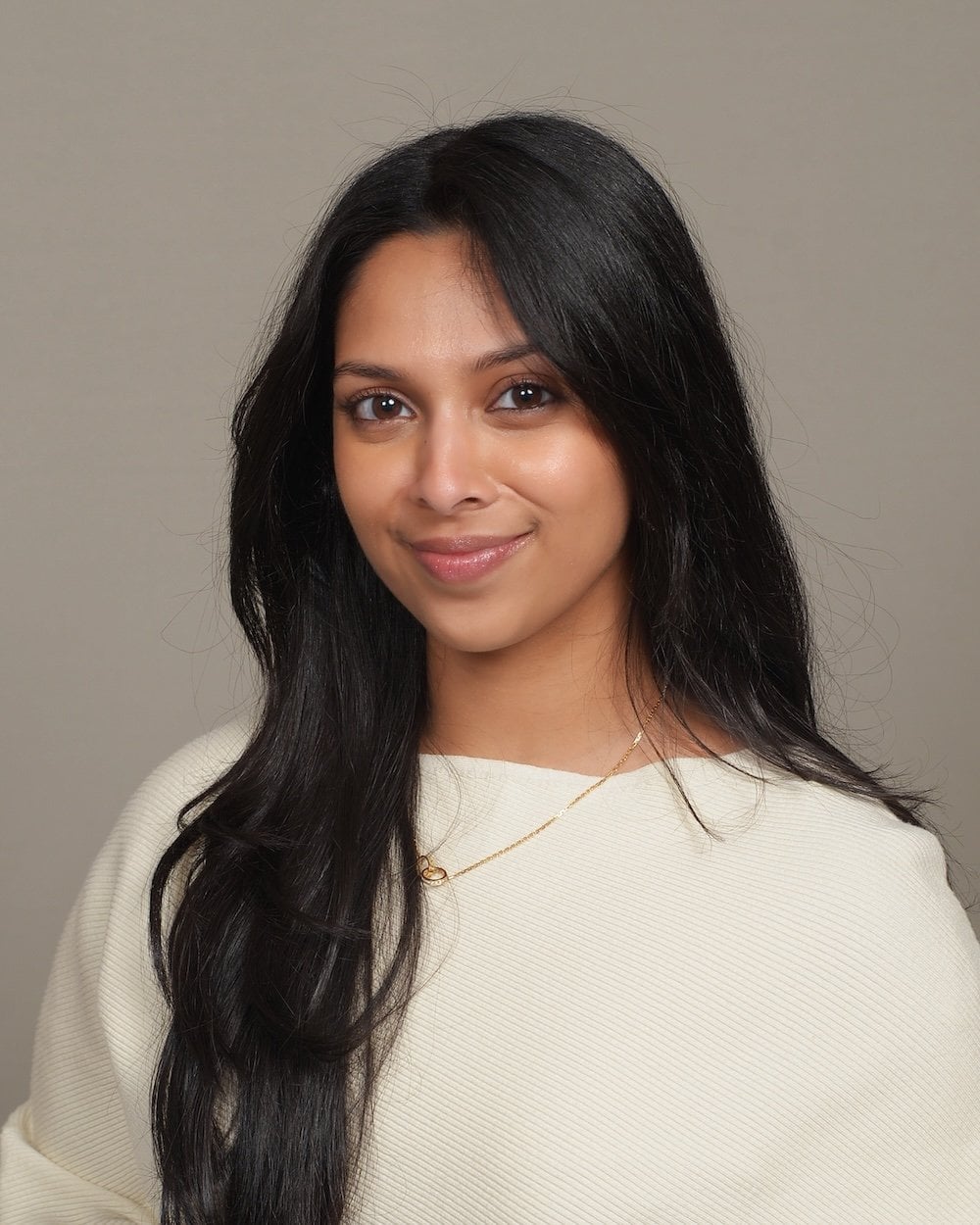
Mal Vivek is the CEO of Zeb, which uses AI to help businesses transform and optimize their operations. With clients in healthcare, retail, financial services, and manufacturing, zeb is one of the youngest firms to earn AWS Premier Tier Services Partner status and AWS Generative AI Services Competency.
When Mal was 15, she was using machine learning to help a research scientist explore patterns in children’s nut allergies. At 17, she was working in computational biology at Memorial Sloan Kettering Cancer Center’s Center for Molecular Oncology.
In high school, she co-founded Girls Make Apps, an organization offering computer science education for female middle school students in the U.S. Her events and courses have impacted hundreds of girls and young women to aspire to a career in tech.
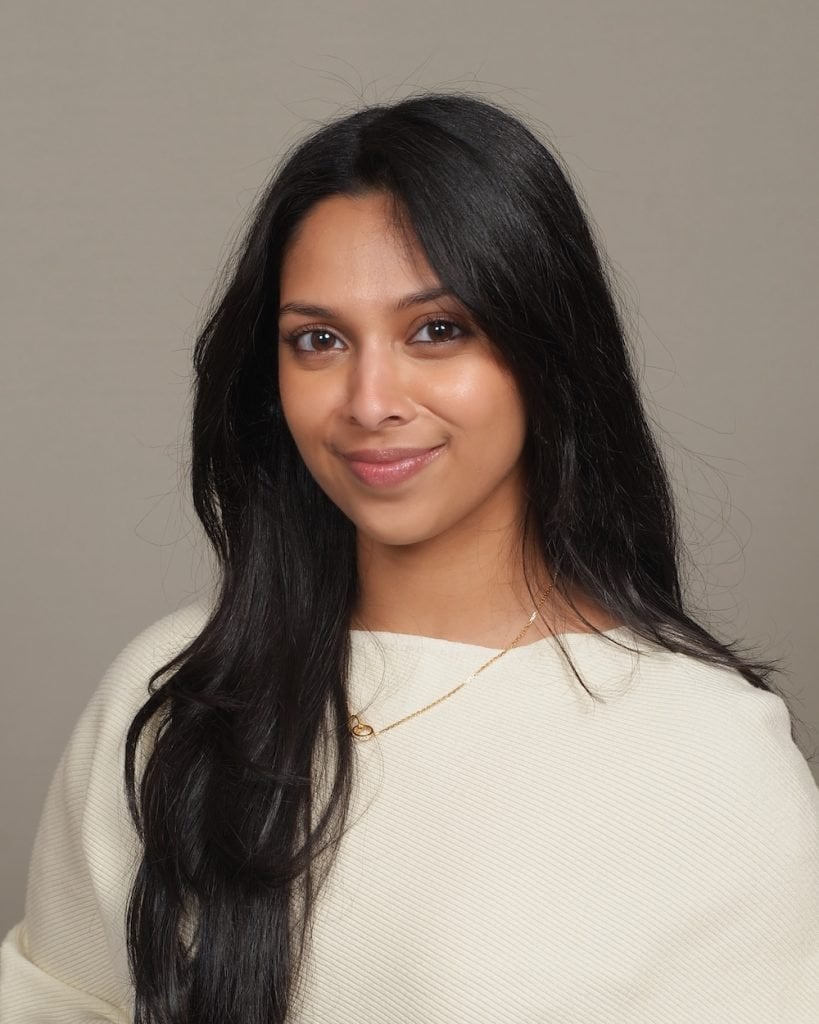
Mal Vivek CEO and Founder of Zeb
Please introduce yourself and tell us in your own words about your inspiring story.
I’m Mal Vivek, CEO and founder of zeb, an AI-centric technology transformation company. My journey started early—I began programming at eight years old and by 15 was using machine learning to explore patterns in children’s nut allergies. At 17, I was working in computational biology at Memorial Sloan Kettering Cancer Center while cofounding a national nonprofit to empower women in technology. After high school, I went on to become a solutions architect at a Microsoft solutions partner, eventually going on to lead it. In 2023, I founded zeb with a vision to make AI equally accessible for all businesses while proving that constant innovation and scale don’t have to be at odds with each other.
We’d love to learn more about how you got to where you are today.
My path has been shaped by seeing gaps others missed and being willing to take shots others wouldn’t. In the system integrator space, I saw vendors operating transactionally without truly understanding how to translate AI into business value. With the AI boom coming, I recognized the need for organizations that could stay ahead of technology AND translate it into actual business applications. My experience across computational biology, leading technology companies, and advocating for women in tech gave me the unique perspective needed to build zeb—combining AI expertise with industry knowledge and the agility to productionize at scale.
What is a typical day like for you?
Building with extreme speed and depth both horizontally and vertically is my daily reality—staying on top of industry impacts while ensuring our large team stays current with relevant technology advances. I’m constantly balancing the need to question the status quo with taking action for positive change. My days involve strategic planning, working with our teams across multiple practices from application development to data engineering, and partnering with clients to solve complex transformation challenges.
What are the three most important habits to be a successful entrepreneur?
First, maintain transparency in your starting point and have clarity about your ideal business state—without understanding where you are and where you want to go, transformation is impossible. Second, avoid wanting to be right all the time and maintain objectivity—solutions that involve throwing more people at problems aren’t real solutions. Third, question the status quo consistently—you need both the willingness to challenge existing ways and the courage to implement better approaches.
Does your company help the community where it is located?
Absolutely—our culture centers on upward mobility, the ability for people to move past what they were born into. A majority of our team are the first in their families to go to college and are the primary breadwinners of their households. Scale for us looks like being able to invest in the education and livelihood of our delivery teams in India without limitation—they are our foundation and the only reason we are successful. India has one of the most extreme wealth gaps globally, and even making a small dent in this is a daunting but personal mission as our team grows and develops.
Every entrepreneur has a goal and a problem they’re trying to solve. What was the inspiration that started your journey?
The biggest challenge I saw was accessibility—so many companies heard big things about AI but didn’t know where to begin, or they didn’t have their data in one place to use it at all. The landscape was death by a thousand cuts with no objectivity to be found. My core belief was to make AI equally accessible for startups and small-to-medium businesses as it is for enterprise, while building use cases that actually deliver ROI. I wanted to create an organization that could understand AI, stay ahead of it, AND translate its use to actual applicable moving parts of business.
How do you prioritize self-care and well-being while managing the demands of your business?
I make myself live by the air mask analogy—you can’t help anyone if you don’t help yourself first. It’s so important to sleep, to take time away from work, and to be able to gain perspective. I really try to be in touch with my emotions and to know what my limits are. Especially when you control your workload, it’s on you to be real and regulate yourself.
What initiatives or actions do you believe are crucial for fostering a more supportive and inclusive business environment for women?
Creating cultures centered on upward mobility—the ability for people to move past what they were born into—is essential. We treat each other equally, don’t take actions without understanding, question the status quo, and work to lift each other up. Having the privilege of the American dream is not something lost on me, and I feel a pressing responsibility to extend that power to those I can. The key is creating opportunities and removing the limitations people traditionally place on women and underrepresented groups while building environments where questioning traditional approaches is encouraged.
What advice would you give to a new business owner? Or to your younger self?
Start small, prove out something valuable on a small engagement, and build from there through demonstrated results rather than promises. Don’t accept the limitations others place on you—they are often limited by their own personal experience; listen, but try to form your own opinions. Be willing to take shots others won’t take because you miss all the shots you don’t take. Focus on solving real problems that deliver actual ROI rather than building for the sake of building.
How do you set your business apart from others in your industry?
We make AI part of the process, not a silo, by having practices that serve every aspect of the technology stack from application development to infrastructure and security. While so many remain transactional, we transform companies end-to-end, integrating AI into existing tech stacks and data so that it’s useful and remains owned by the client. Our goal is to drive their businesses forward and achieve better outcomes for them and their customers.
Which female leader do you admire, and why?
I’m a huge fan of Taylor Swift. I think she has broken so many limits that the world has tried to place on her while being one of the most publicly vulnerable people ever. There is such a strength in her kind of leadership—in killing with kindness, no matter what is said about her, and in letting it all roll off her back. I’ve learned and been moved by her and am grateful to have grown up in her world.
Do you have a favorite quote or motto that inspires you?
I’ve always resonated with a saying Warren Buffett often quoted—“Chains of habit are too light to be felt until they are too strong to be broken.” It is a constant reminder that every action you take has a ripple effect; each one builds on the last. It really reminds me that there is always a weight to my decisions and helps me make the right ones.
Want more inspiring interviews?
We love spotlighting amazing women! Check out these interviews (plus so many more) on She Owns It.
Meet Lil’ Gourmets founder Shibani Baluja, and Woofie’s VP of Operations, Lydia Best. Get to know entrepreneur Cara du Plessis, pop-alt artist Lauren Presley, and award-winning travel blogger La Carmina.
All of these and more are part of our interview series spotlighting successful women in business.
The views and opinions expressed reflect those of our guest contributor, interviewee, or sponsor. We have evaluated the links and content to the best of our ability at this time to make sure they meet our guidelines. As links and information evolve and change, we ask that readers do their due diligence, research, and consult with professionals as needed.
The publication of Content on the site does not constitute an endorsement by She Owns It.
If you have questions or concerns about any content published on our site, please let us know. We strive only to publish ethical content that supports our community. Thank you for supporting the brands that support this blog.

Melissa Stewart is the founder of SheOwnsIt.com. She is a Purveyor of Possibility, Entrepreneur Advocate and Coffee Addict. She believes that behind every successful woman is her story. What’s your story?