The information and opinions published represent the views and opinions of the interviewee and do not necessarily represent the views or opinions of She Owns It. The publication of Content on the site does not constitute an endorsement by She Owns It.
Lena McDearmid has spent more than two decades in finance and technology, including fifteen years inside fintech startups where she helped build and scale high-growth companies. A seasoned executive and strategist, she co-founded one of Atlanta’s fastest-growing fintech ventures and previously held leadership roles at GreenSky, a company that reached a billion-dollar valuation before its IPO.
Today, Lena is the founder and CEO of Wryver, an advisory firm that helps companies integrate culture into business strategy to drive performance, trust, and long-term growth. Her work sits at the intersection of operational excellence and human leadership, helping executives design organizations that work as well for their people as they do for their profits.
A South Georgia native from a family of entrepreneurs, Lena grew up surrounded by grit, determination, and the belief that your voice and effort matter. She credits that foundation for her ability to lead through change, take risks, and build from the ground up.
Through Wryver and her writing, Lena continues to shape the next generation of leadership — one grounded in clarity, accountability, and the courage to grow.
Takeaways:
- McDearmid believes culture is a measurable part of business strategy, not a perk or afterthought. Through her firm, Wryver, she helps leaders design organizations that perform with both precision and humanity.
- After two decades in finance and fintech, she’s learned that growth without alignment eventually wobbles. Sustainable success comes from connecting people, process, and purpose.
- Diagnosed with multiple sclerosis at 30, McDearmid rebuilt her life and leadership around health, clarity, and discipline — proving that success is not about speed,
Get to know Lena McDearmid, Founder at Wryver
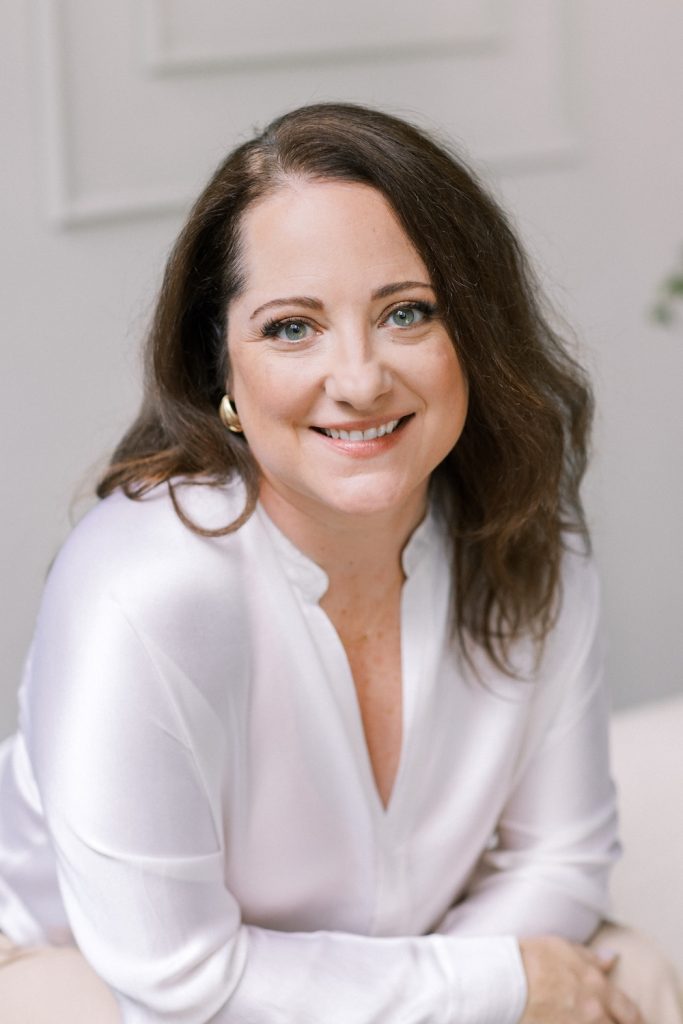
Lena McDearmid, Founder at Wryver
“You don’t grow by being fearless. You grow by walking straight into what scares you.” – Lena McDearmid
Please introduce yourself and tell us in your own words about your inspiring story
I’m not sure I have one big “inspiring story.” I’ve just always been someone who works hard, pays attention, and keeps evolving. I started in finance in my late teens, moved into technology, and found my way into the fast-moving world of fintech. I’ve built and led multiple startups, co-founded a company that became one of the fastest-growing in Atlanta, GA, and learned to navigate both the highs and the humbling moments that come with building something from the ground up.
I come from a long line of entrepreneurs — women and men who built their own businesses and weren’t afraid to take risks. I grew up in an environment where your voice mattered, where you were encouraged to speak up and go after what you wanted. That shaped how I lead and how I live.
When I look back, I still see that young woman from South Georgia who wanted to build a meaningful life through work, connection, and contribution. I’ve learned that success is a practice, not a destination. And the real inspiration, for me, is in the permission to keep growing and building both companies and yourself.
We’d love to learn more about how you got to where you are today.
My path has been built through two decades in finance and fifteen years in fintech startups, where I learned how to navigate both growth and grit. I’ve held roles across operations, credit, and strategy, and I’ve been part of companies that scaled from idea to unicorn and from early concept to IPO. Those experiences taught me that success is rarely linear. It comes from clarity, resilience, and the ability to lead through change.
Over time, I realized that what makes growth sustainable isn’t only execution, it’s alignment. When people understand the vision and feel connected to it, performance follows. That insight became the foundation for Wryver. It brings together everything I’ve learned about scaling companies and leading people, helping organizations grow with both structure and soul.
What made you decide to go into business for yourself?
After working inside several startups and helping to scale others, I knew I was ready to build something of my own. I wanted the freedom to design a business that reflected how I believe leadership should work: grounded in clarity, accountability, and respect for people. Founding Wryver was a natural next step.
I’ve seen firsthand how success can come at the cost of culture when growth moves faster than alignment. I wanted to change that equation. Wryver gives me the ability to combine everything I’ve learned from two decades in finance and technology with the human side of leading teams. It’s where strategic execution meets cultural design, and it allows me to help other founders and executives build companies that perform with both precision and purpose.
If you had one piece of advice for someone just starting out, what would it be?
Start before you feel fully ready. Most of what you need to know, you will learn by doing. The difference between people who build something and people who only talk about it is that one group moves even when it feels uncertain.
At the same time, stay grounded in clarity. Know what you are building, why it matters, and what you are unwilling to compromise along the way. The early decisions you make about how you lead, who you hire, and what you measure will shape your company’s DNA more than any marketing campaign ever will.
What was the inspiration that started your journey?
Over the years, I saw a pattern repeat itself inside fast-growing companies. Strategy, innovation, and execution would get the majority of attention, but culture, which includes the way people communicate, trust, and make decisions together, was often left unmeasured until it became a problem.
I wanted to change that. The inspiration behind Wryver was the belief that culture can and should be treated as a core business function, just like finance or product. When culture is designed intentionally, it becomes a system that supports performance, not something that happens by accident.
I founded Wryver to help leaders make culture a real part of the operating plan, not just a talking point. Because when you align people and purpose with process and strategy, performance follows naturally.
How do you prioritize self-care and well-being while managing the demands of your business?
I learned the hard way that self-care isn’t optional. In my early thirties, I was working eighteen-hour days, six or seven days a week, inside a company I didn’t found but loved deeply. I ignored every signal my body was sending—fatigue, stress, burnout—until it finally shut me down. I was diagnosed with relapsing-remitting multiple sclerosis, and for me, that manifests as paralysis that starts in my hands and feet and moves through the rest of my body. It was a wake-up call I couldn’t ignore.
From that point on, I made a decision to live differently. I rebuilt my health and my habits with the same discipline I once reserved for work. I work out daily, eat clean, drink plenty of water, and use red light therapy and saunas regularly. I meditate, lift weights, and move my body every day. My health routines are scheduled into my calendar just like meetings, and I don’t compromise them.
But what I’ve learned over time is that health isn’t only physical, it’s also environmental. The culture you work in affects your nervous system, your energy, and your long-term well-being. In my experience, burnout often has more to do with the environment than diet or exercise. That’s one of the reasons culture has become so central to my work today.
So how do I prioritize self-care? I come first. My health is the foundation for everything else I build. I design my schedule, my company, and my commitments around that reality. It’s not indulgent, it’s responsible.
What would you consider your biggest accomplishment and why?
Becoming a founder for the first time was a turning point for me. I don’t think I fully understood the magnitude of it at the time, but now I carry it with real pride. It represents the moment I took a leap. It’s when I put my ideas, hopes, and dreams into the world and decide to build something that didn’t exist before.
Being seen and recognized as an entrepreneur matters to me. It always will. Founding a company is more than a title; it’s a kind of talisman. It marks a willingness to risk comfort for conviction, to keep building even when the outcome isn’t certain. It’s a shared language among those who have done it, a quiet understanding of how hard, humbling, and extraordinary it really is.
What have been some of the biggest challenges and obstacles you’ve had to navigate?
One of the hardest lessons for me has been learning not to internalize every failure or missed opportunity as a personal reflection of my worth. When you’re leading, every outcome has your name attached to it, and it’s easy to carry that weight home with you. But entrepreneurship isn’t about getting everything right. It’s about getting back up, recalibrating, and leading forward.
The challenge is staying human in the middle of it all. When you’re building something, the lines between who you are and what you do can blur. You can lose sleep, lose perspective, and start to believe your value is tied to performance. I’ve had to learn to create distance between the work and the person doing it.
Therapy, meditation, and reflection have helped as well as reminding myself that mistakes are part of the job, not proof that I’m failing at it. The truth is, entrepreneurship will test every part of you — patience, resilience, humility. It will also show you who you are when things get hard. And you have to be willing to sit with that, learn from it, and keep going.
What challenges have you faced in the workplace, especially in your experience in male-dominated environments?
In the early part of my career, it was often lonely. I was frequently the only woman in the room, and that changed everything — the language, the cues, the dynamics. You spend a lot of energy learning how to navigate those spaces, how to be heard, and how to lead without losing your natural style.
There were moments early on when things were said or done that crossed lines, and I didn’t have the words or the safety to call it out. Most of the people I reported to or looked up to were men, and I didn’t have many examples of women in the roles I was aiming for. That lack of visibility made it harder to imagine what leadership could look like in my own voice.
Over time, I found my way. I learned how to lead from both strength and empathy, and I was fortunate to work with male colleagues who respected and supported that. But the truth is, being the “first” or the “only” comes with fatigue. You are constantly translating, proving, and adapting.
What I carry forward from that experience is a commitment to create better environments for those who come next. I want the women who follow to see leadership modeled in ways that reflect them, so they don’t have to spend so much time convincing anyone, including themselves, that they belong.
What initiatives or actions do you believe are crucial for fostering a more supportive and inclusive business environment for women?
Inclusion has to be intentional. Companies should regularly audit who they promote, who they invest in, and whose ideas are influencing key decisions. Look at the data, such as promotion rates, pay equity, turnover, and who’s getting the high-visibility assignments that lead to advancement. If women aren’t proportionally represented at those decision points, it’s a signal the system needs attention.
Intentional inclusion also means building structures that make it possible for women to stay and thrive through all stages of life. Flexibility isn’t only about hours or location. It’s about designing work that recognizes the realities of health, caregiving, and seasons of energy and focus. For many women, that includes not just pregnancy or parenting, but also menstrual health, perimenopause, menopause, and other transitions that can meaningfully affect energy, concentration, and stress.
Forward-thinking companies are beginning to normalize those conversations, offer health benefits and leave policies that extend beyond maternity, and train leaders to respond with understanding instead of stigma.
When leaders get this right, it doesn’t just support women; it strengthens performance across the board. Teams with inclusive practices make better decisions, retain more talent, and build the kind of trust that fuels long-term growth.
Do you have a favorite quote or motto that inspires you?
As Joseph Campbell said, “The cave you fear to enter holds the treasure that you seek.”
This has been a touchstone quote for me for many years. I offer it to myself often when I’m scared, nervous, or standing at the edge of something new. You’re rarely afraid of things that don’t matter to you. The fear usually means it’s important.
For me, the lesson isn’t just about achieving the thing, it’s about reaching for it. Growth happens in the reaching. The courage to step into discomfort is what unlocks everything that comes next.
Conclusion
At this stage in my career, I’m most interested in work that feels meaningful — building companies, cultures, and leaders who care about doing things the right way. After two decades in finance and fintech, I’ve learned that growth means little without alignment, clarity, and integrity. Through Wryver, I help organizations connect those dots so they can scale sustainably and lead with both strength and humanity.
Readers can learn more or connect with me at www.wryver.com or on LinkedIn at linkedin.com/in/lenamcdearmid.
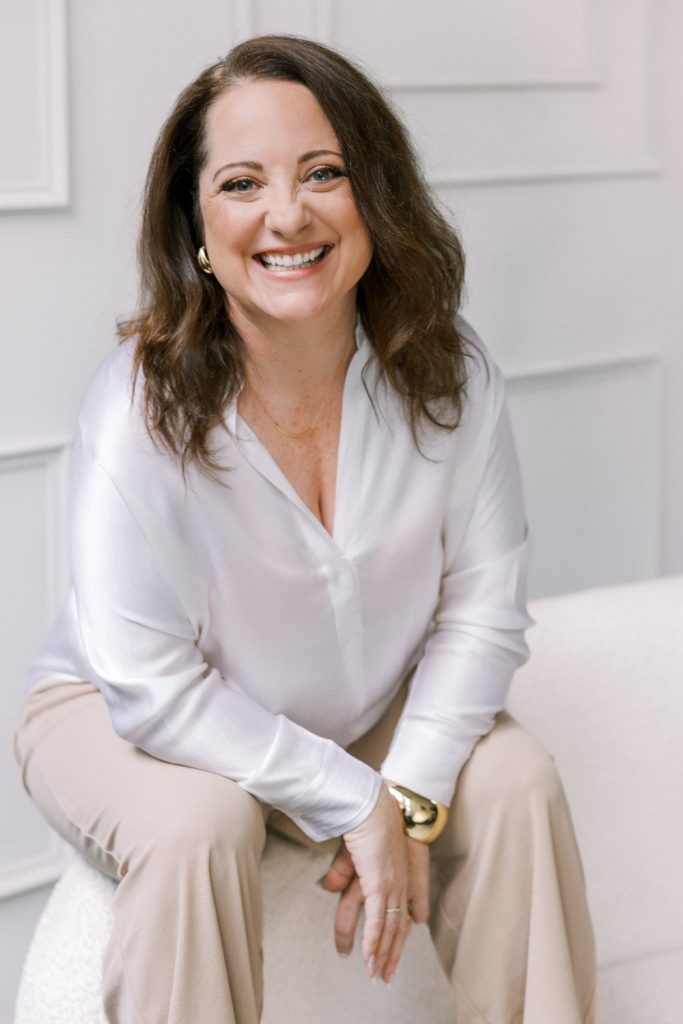
“Culture isn’t how it looks. It’s how it feels to work there.” – Lena McDearmid
Want more inspiring interviews?
We love spotlighting amazing women! Check out these interviews (plus so many more) on She Owns It.
Meet Mal Vivek, CEO and Founder of Zeb, and Woofie’s VP of Operations, Lydia Best. Get to know entrepreneur Cara du Plessis, pop-alt artist Lauren Presley, and Mia Umanos, CEO of Clickvoyant.
All of these and more are part of our interview series spotlighting successful women in business.
The views and opinions expressed reflect those of our guest contributor, interviewee, or sponsor. We have evaluated the links and content to the best of our ability at this time to make sure they meet our guidelines. As links and information evolve and change, we ask that readers do their due diligence, research, and consult with professionals as needed.
The publication of Content on the site does not constitute an endorsement by She Owns It.
If you have questions or concerns about any content published on our site, please let us know. We strive only to publish ethical content that supports our community. Thank you for supporting the brands that support this blog.

Melissa Stewart is the founder of SheOwnsIt.com. She is a Purveyor of Possibility, Entrepreneur Advocate and Coffee Addict. She believes that behind every successful woman is her story. What’s your story?