Why Everyday Drying Habits Matter
Hair is at its most fragile when wet, and repeated exposure to heat, friction, tension, and chemical processing can wear down its strength and appearance over time. What a lot of people overlook is that how they dry their hair daily may matter just as much as which products they use. Whether someone reaches for a hair dryer once in a while or relies on one every day, the technique behind it can determine how much stress the hair actually absorbs. This isn’t an argument for giving up heat styling entirely—it’s about building a gentler, more sustainable routine that works with how hair naturally behaves, rather than against it.
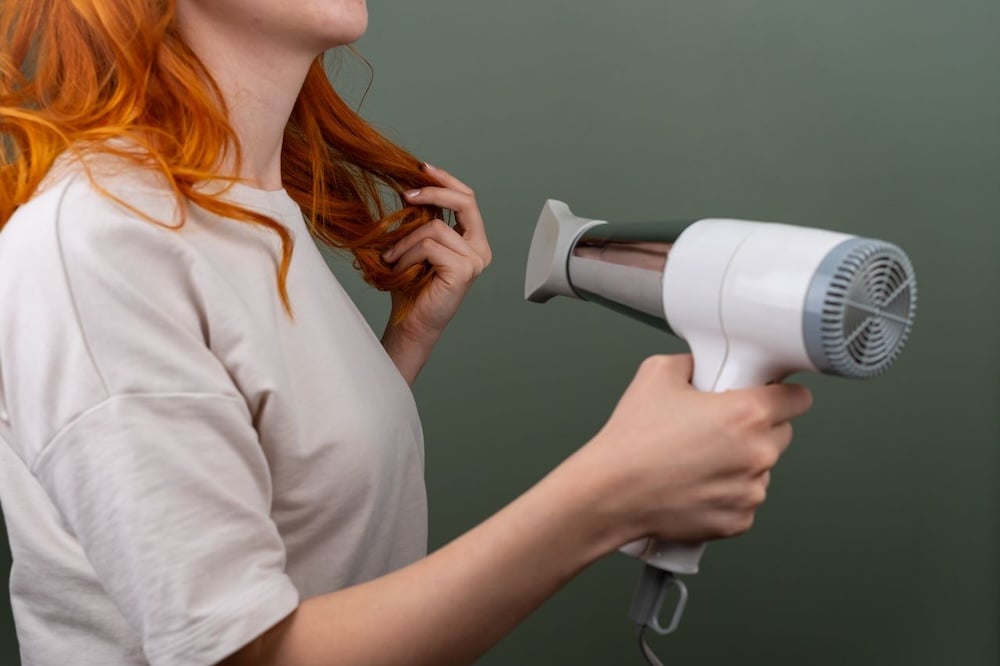
Photo credit: Beyzanur K. on Pexels
Understand What Causes Hair Damage
Heat and moisture loss are among the most common culprits behind hair stress. Too much heat, or heat applied for too long, can pull moisture out of the strand, roughen its outer layer, and eventually lead to split ends or breakage. There’s a real difference between the mild, temporary effects of one styling session and the cumulative toll that builds up from frequent high-heat exposure over months or years. That toll tends to show up faster in bleached, chemically treated, fine, curly, or already weakened hair, simply because this hair has less structural reserve to draw on when it’s under repeated stress.
Friction and mechanical stress matter just as much. Rubbing hair roughly with a towel, brushing too aggressively, wearing tight hairstyles, or forcing a comb through knots can all weaken the hair shaft over time. Wet hair is especially vulnerable here, since it stretches more easily and snaps under tension that dry hair could withstand. It’s worth separating this kind of shaft damage from hair loss that originates at the follicle—everyday drying habits aren’t generally linked to permanent hair loss, though they can absolutely contribute to visible breakage and ends that look thinner than they should. Dermatology guidance generally supports handling wet hair gently and moderating heat exposure as sensible, evidence-backed precautions. That said, if someone notices persistent shedding, scalp pain, or visible thinning, those are signs to see a professional rather than try to self-diagnose.
Prepare Hair Before Applying Heat
Before any heat tool comes near your hair, gently press or blot out excess water with a soft towel instead of rubbing it dry. Letting hair partially air-dry first cuts down on how much heat you’ll need afterward. When detangling, start at the ends and work upward—this matters especially for long, curly, or textured hair, where pulling from the roots down can cause unnecessary damage.
The right approach also shifts depending on hair’s condition. Fragile or chemically treated hair does better with less heat and tension; dense hair dries more evenly when it’s sectioned off first; curly or textured hair holds up best when its natural pattern is disturbed as little as possible; and fine hair usually only needs a gentle airflow and light brushing. Partial air-drying doesn’t mean leaving hair damp for hours on end, though—if that dampness starts to feel uncomfortable on the scalp, it’s perfectly fine to move on to controlled heat sooner rather than later.
Before you dry:
– Blot, don’t rub, with a towel
– Detangle from ends upward
– Apply a small amount of suitable product if desired
– Divide hair into sections if it’s thick or long
Use Heat More Carefully
The point of blow-drying is to get hair sufficiently dry, not to blast it with as much heat as possible. As a general rule, it’s smart to use the lowest effective heat—start on low or medium and only bump it up if it’s genuinely needed. What counts as “enough” heat depends on hair density, texture, how damp it still is, and its overall condition.
It also helps to keep the airflow moving instead of holding hot air over one small section for too long. Constant movement spreads heat out more evenly and keeps any single part of the hair from bearing the brunt of it. Keeping a reasonable distance between the tool and your hair is a good habit too, though exactly how far depends on the device and hair type in question.
Finally, cut down on repeated passes where you can. Working through hair section by section, rather than going over the same strands again and again, shortens the total time hair spends under heat. Shorter, controlled drying sessions beat prolonged high heat every time—once hair feels adequately dry, that’s the cue to stop, not a signal to keep going until it feels hot to the touch.
Adapt the Technique to Hair Type and Styling Goal
Straight and fine hair generally does well with lower heat and a light hand when brushing, since over-drying can leave it brittle or staticky. Finishing with a brief blast of cool air can help the style set more comfortably.
Curly, coily, or textured hair benefits from less friction and handling overall. A diffuser attachment can spread airflow more gently across curls, though it’s not strictly necessary for good results. What matters more is preserving moisture and avoiding the urge to restyle repeatedly, both of which help keep curl definition intact.
Thick or long hair dries faster and more evenly when it’s sectioned beforehand, which also cuts down on how long heat needs to be applied. Working through roots and denser sections methodically tends to beat repeatedly blasting the whole head with higher heat.
Chemically treated or damaged hair usually calls for lower heat, less frequent styling, and more time to recover between treatments. Conditioners can make hair more manageable and improve how it looks, but they can’t undo structural damage that’s already happened. For severe breakage or scalp symptoms, a stylist or dermatologist is worth consulting.
Here’s a simple comparison worth considering: one routine involves rubbing hair roughly with a towel, then blasting it with high heat for several uninterrupted minutes. Another involves blotting hair dry, letting it air-dry partially, sectioning it, and drying at a lower setting while keeping the airflow moving. The second approach takes a bit longer, but it typically involves far less cumulative heat and friction—though, as with most things related to hair, individual results can vary.
Air-Drying Versus Blow-Drying: Avoiding Oversimplified Advice
Neither method wins outright. Air-drying skips direct heat, but it can mean hair stays damp—and more fragile—for longer, which opens the door to friction from pillows, clothing, or repeated handling. Blow-drying, on the other hand, can be perfectly reasonable when it’s done with controlled heat, enough distance, a limited duration, and minimal pulling. The more useful principle, regardless of which method you lean toward, is to reduce the overall combination of heat, time, friction, and tension.
Key takeaway: The gentlest routine is usually the one that gets the job done with the least amount of heat and handling.
Essential Electrical and Bathroom Safety
Electrical drying tools should never be used in or near a bathtub, or in any situation where they could fall into water. Keep them well away from sinks, wet countertops, and standing water whenever they’re plugged in. Ground-fault protection can lower certain electrical risks, but it’s not a license to treat water contact as safe. Always unplug the tool once you’re done, follow the manufacturer’s instructions, and replace anything with a frayed cord, damaged plug, cracked housing, or signs of unusual overheating. Consumer-safety authorities are consistent on this point: household electrical appliances and water don’t mix, no matter what safety features are built in.
When Hair or Scalp Changes Need Professional Advice
Some signs call for a doctor’s visit rather than a tweak to your routine: sudden or ongoing increased shedding, noticeable bald patches, scalp pain or burning, sores or significant irritation, heavy breakage near the scalp, or symptoms that stick around even after you’ve cut back on heat and handling. Hair damage, scalp disorders, nutritional issues, and medication side effects can all look similar from the outside but need very different treatment approaches—so it’s worth consulting a dermatologist rather than assuming styling habits are the whole story.
Practical Routine for Lower-Stress Drying
- Gently press out excess water.
- Allow hair to partially air-dry when practical.
- Apply a suitable styling or conditioning product per its instructions.
- Detangle carefully and divide hair into sections.
- Begin with the lowest effective heat and moderate airflow.
- Keep airflow moving and avoid lingering on one spot.
- Minimize brush tension and repeated passes.
- Stop once hair is dry enough for the intended style.
- Unplug and store the tool away from water.
Heat protectant products can ease some of the stress that comes with styling, but they’re not a free pass for unlimited high heat. Stick to the label directions, and stop using anything that causes buildup or irritation.
A Gentler Routine Is More Sustainable Than Perfect Styling
Occasional heat styling isn’t automatically a problem—how risky it is depends on temperature, duration, frequency, technique, and the condition hair is already in. Rather than trying to overhaul an entire routine overnight, it’s more realistic to change one or two habits at a time. The core principles stay the same throughout: cut back on unnecessary heat, start with hair that’s partly dry, minimize pulling and friction, adjust technique to match hair type, and treat electrical safety as completely non-negotiable. Give it a few weeks, pay attention to how hair and scalp respond, and adjust frequency, heat level, and handling from there.