This post may contain affiliate links and/or editorial content and is for informational purposes only. Please read our disclosure for more information.
Ever walked into an office that looked spotless, yet something still felt off? A clean-looking desk and an empty trash can are the easy part. The gap between a workspace that looks tidy and one that’s actually properly maintained usually shows up in the places nobody thinks to check: the vents, the floors underneath, the surfaces that get touched but never wiped.
Most office cleaning arrangements cover the obvious ground, wiped desks, vacuumed carpets, emptied bins, but stop well short of what a genuinely complete program actually includes. Knowing what “complete” is supposed to look like makes it much easier to spot the gaps in whatever’s currently being done at your own workplace.
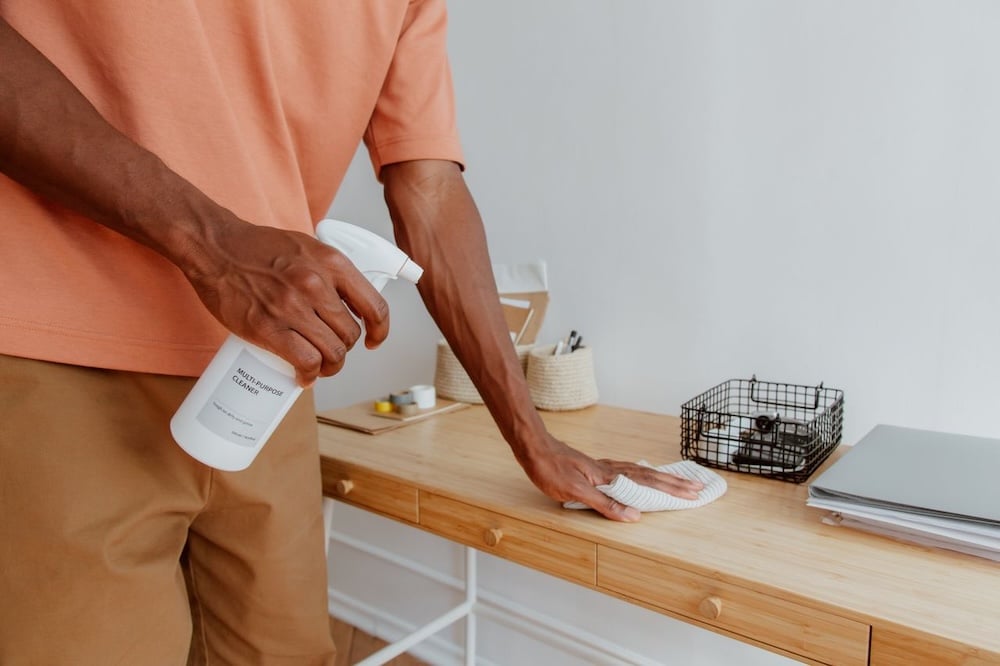
Photo credit: Ron Lach on Pexels
Where Basic Cleaning Quietly Stops Short
Daily surface cleaning handles what’s visible, but a lot of what actually affects a workplace happens in places a quick wipe-down never reaches. This gap isn’t usually anyone’s fault, it’s just what happens when a routine is built around what’s easy to see. Here’s where that gap usually shows up first.
- Air vents and filters, where dust collects silently for months.
- Upholstery and fabric partitions, which trap allergens far below the surface.
- Floor finishes, which wear down in ways that only show up later.
None of these show up on a quick walk-through, which is exactly why they’re the first things a basic routine tends to miss. The CDC recommends including high-touch surfaces in cleaning checklists and logs to help ensure cleaning procedures are completed consistently and can be verified over time.
What a Complete Program Actually Adds
Understanding where basic cleaning falls short is one thing, seeing what actually fills that gap is another. A genuinely complete program builds specific categories into its routine, not just a longer to-do list. Here’s what separates it from the basics.
1. It Targets High-Touch Surfaces Specifically
Phones, keyboards, door handles, and light switches get touched dozens of times a day, and daily wiping alone doesn’t always catch them consistently. A complete program treats these surfaces as their own category, not an afterthought folded into general tidying. This is often the single biggest difference between a workplace that looks clean and one that’s actually reducing the spread of illness.
2. It Covers Air Quality, Not Just Surfaces
Dust and allergens build up in vents, filters, and ceiling fixtures long before anyone notices a problem. A complete program schedules this kind of cleaning on a regular cycle, not just when someone mentions the air feels stuffy. This matters more than most people expect, since indoor air quality affects comfort and health in ways that surface cleaning alone can’t touch.
3. It Includes Deep Floor Care Cycles
Daily vacuuming and mopping keep floors looking presentable, but carpets and hard floors both need deeper attention on a schedule to actually last. This means stripping, waxing, or extraction at set intervals, not just when a floor starts to look visibly worn. Skipping this step doesn’t show up right away, but it shortens the life of flooring considerably and eventually requires far more expensive restoration.
4. It Reaches the Places Daily Cleaning Misses
Blinds, baseboards, upholstered furniture, and light fixtures all collect dust that daily cleaning routines simply don’t reach. A complete program builds these into a weekly or monthly rotation instead of leaving them for whenever someone happens to notice. This way, these areas get addressed consistently rather than only once they’ve become obviously dirty.
5. It Comes With Documentation and Accountability
A genuinely complete program tracks what’s been done, when, and by whom, rather than relying on trust that everything got covered. This kind of record turns cleaning into something that can actually be checked, not just assumed. It also makes it easy to spot exactly where a gap might be forming before it becomes a bigger problem.
6. It Adapts to the Specific Needs of the Facility
Every workplace has different cleaning demands based on its size, industry, layout, and daily activity levels. A complete program adjusts its approach to focus on the areas that matter most, whether that means more frequent sanitation in shared spaces, specialized care for certain surfaces, or customized schedules that match how the facility is actually used.
Checking Whether Your Current Cleaning Covers This
A few quick checks reveal whether an existing cleaning arrangement actually covers this ground or just handles the basics. Here’s what’s worth asking directly.
- Vent and filter history — Ask when air vents and filters were last cleaned, not just when the office was last vacuumed.
- Floor care schedule — Check whether floor care follows a set cycle, rather than only happening once floors look visibly worn.
- High-touch surface treatment — Confirm these surfaces are treated as their own task, not folded into general daily tidying.
- Documentation — Ask for a completed task log or report, rather than taking cleanliness on faith.
Reviewing a full office cleaning checklist makes it much easier to spot exactly which of these categories your current arrangement is missing.
ABS/CBS is one company that helps businesses maintain cleaner, healthier workplaces through structured commercial cleaning solutions, and their checklist highlights the range of tasks that should be considered when evaluating an office cleaning program.
Why This Consistency Matters More Than a Single Deep Clean
A one-time deep clean can make a workplace look great for a week, but it doesn’t fix the underlying gap if the routine going forward still skips air quality, high-touch surfaces, or scheduled floor care. The value of a complete program comes from consistency, not from an occasional catch-up effort after things have already started slipping.
This is really the difference between a workplace that stays consistently clean and one that cycles between looking great and looking neglected depending on when the last deep clean happened.
Final Thoughts
A workplace can look clean on the surface while still missing the parts of a cleaning program that actually matter most: air quality, high-touch surfaces, and floor care that follows a real schedule. Reviewing your current arrangement against these categories is often the fastest way to see whether “clean” and “complete” actually mean the same thing in your office. A single deep clean won’t close that gap for good; it’s the consistency behind it that actually keeps a workplace properly maintained over time.