This post may contain affiliate links and/or editorial content. Please read our disclosure for more information.
Working from home sounds great until it doesn’t. The distractions pile up, the boundaries between work and personal time blur, and for small teams trying to move fast, the isolation starts to slow everything down. A private office lease feels like the natural next step, but for most small businesses, the cost and commitment that come with it arrive way before the revenue does. Coworking spaces are a bridge between both.
Coworking spaces offer shared, fully serviced work environments where teams pay for access on flexible terms rather than locking into years of fixed overhead. The model has taken off across business cities like Frankfurt, and the reason isn’t just cost. It’s what these spaces do to how teams actually work.
Let’s look at five ways coworking spaces are changing productivity for small business teams.
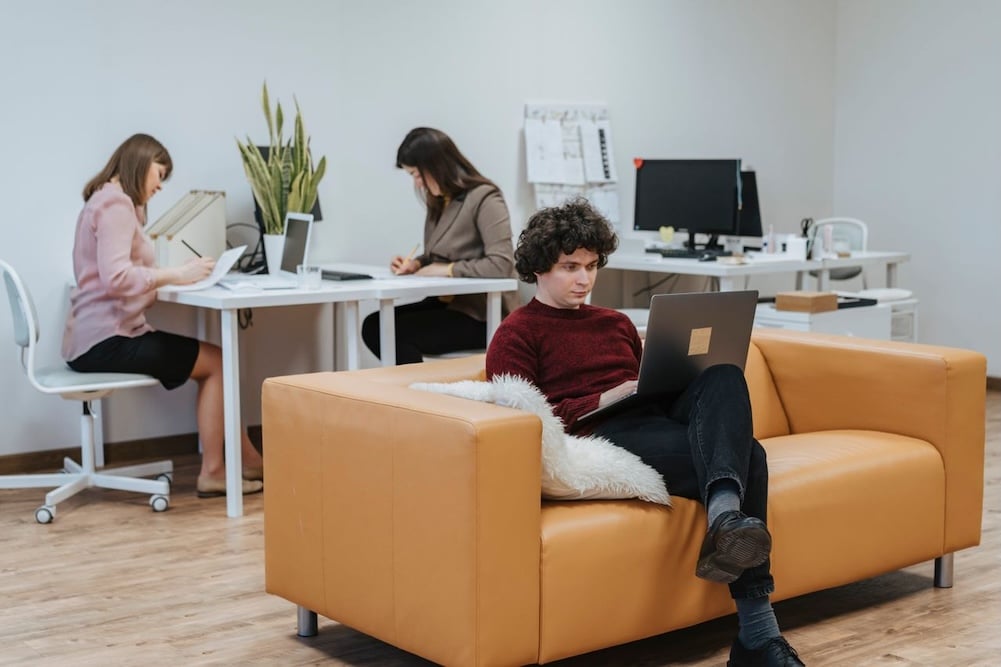
Photo credit: olia danilevich on Pexels
1. Structure Replaces the Chaos of Working Remotely
Remote work gave a lot of people freedom, but freedom without structure is hard to sustain over time. When your home is also your office, the lines between focused work time and everything else get blurry fast. Tasks take longer, meetings feel scattered, and the kind of deep focus that moves a project forward becomes genuinely hard to find.
A dedicated workspace changes that. Having a place you go specifically to work creates a mental shift that most people underestimate until they experience it. You arrive, you sit down, and your brain knows what mode it’s in. For small teams, that shared rhythm also builds a sense of accountability that remote setups struggle to replicate. When your teammates are in the same room working hard, it’s a lot easier to stay focused yourself.
2. The Environment Is Built for Getting Things Done
A good workspace removes friction before you even sit down. Fast internet that actually works, meeting rooms you can book without a fight, quiet areas when you need to focus, and common areas when you need to think out loud. These things sound basic, but they’re genuinely hard to get right in a home setup or a budget office rental.
Small business owners who have explored what a coworking space Frankfurt offers often find that the environment is designed specifically around productive work, with everything already in place before you arrive. Shared workspaces from providers like the K1 Business Club are usually set up to remove the kind of operational friction that quietly slows teams down, so the energy that would have gone into troubleshooting goes back into the actual work. That shift is harder to quantify than a cost saving, but most teams feel it within the first week.
3. Fewer Interruptions, More Deep Work
Open-plan offices have a bad reputation for a reason. Constant noise and interruptions are genuinely bad for focused work, and a lot of traditional office setups make this worse rather than better. Incorporating soundproofing panels into office interiors can also help manage unwanted noise while creating more comfortable spaces for focused work. Good coworking spaces are designed with this in mind. They typically offer a mix of quiet individual work areas, collaborative zones, and private meeting rooms, so you can match the space to the kind of work you’re actually doing at any given time.
According to recent studies, people working in coworking environments report higher levels of productivity, focus, and job satisfaction compared to those working in conventional offices or from home. That finding holds across different industries and team sizes, which suggests it’s the environment itself driving the effect rather than any one specific feature.
4. Spontaneous Collaboration Happens More Than You’d Expect
Small teams often hit walls that a single conversation with the right person could break through. The problem in a private office is that the right person is never just down the hall. In a coworking space, they sometimes are. Designers, developers, marketers, and operations people from completely different companies share the same kitchen, the same lounge, and the same events calendar.
In practice, some of the most useful conversations happen without any planning at all. A quick chat over coffee turns into a referral, a collaboration, or a solution to something you’ve been stuck on for days. That kind of low-effort, high-value exchange is one of the real productivity multipliers that coworking spaces offer, and it’s something a private office simply can’t manufacture.
5. Less Admin Means More Time on What Actually Matters
Running an office takes time that doesn’t show up anywhere on a project plan. Someone has to deal with the internet provider when things go down, manage the cleaning schedule, book the repair when equipment breaks, and handle a dozen other small repetitive admin tasks that quietly eat into the working week. For a small team, those tasks often fall on the founder or a senior team member who has better things to do.
Coworking spaces remove that entire layer of responsibility. The space is managed for you. Demand for coworking memberships has grown consistently year on year, with operational simplicity cited as one of the primary drivers among small business users. When your team isn’t spending mental energy on facilities management, that energy goes back into the work.
Closing Thoughts
Productivity for small teams isn’t just about working harder or longer. It’s about having the right conditions to do focused, meaningful work without unnecessary friction getting in the way. Coworking spaces create those conditions in a way that home offices and traditional leases both struggle to match. For small business teams that are serious about moving faster and working smarter, the environment they work in deserves just as much attention as the work itself.