This post may contain affiliate links and/or editorial content. See our disclosure statement for details.
Two people are standing on the same busy corner when a crash happens. Both are honest. Both saw it with their own eyes. Yet one swears the blue car ran a red light, while the other is sure the light was still yellow.
It sounds like someone must be lying, but that’s usually not the case. Eyewitnesses disagree all the time, even when they have no stake in the outcome and nothing to gain by bending the truth. Their brains simply captured the same moment differently.
That gap between two honest, conflicting stories is fascinating, and it matters a lot after a collision. Insurance companies, police officers, and attorneys often lean on witness accounts. Knowing why those accounts can clash helps explain why evidence beyond human memory is so important.
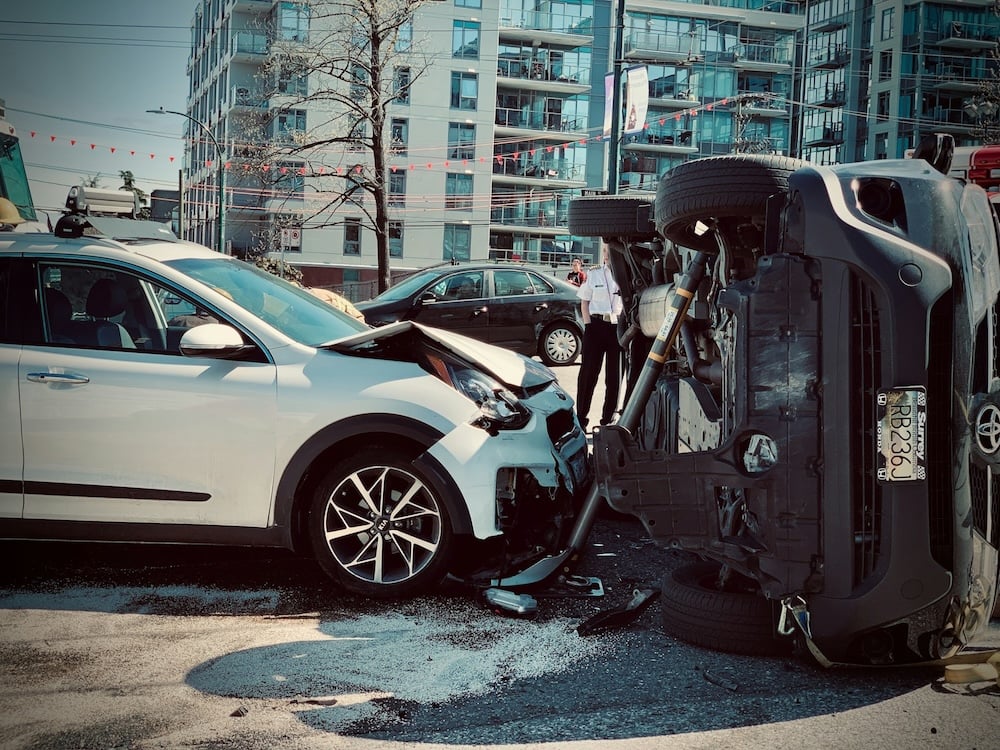
Photo by Anthony Maw on Unsplash
Why Human Memory Isn’t a Video Recording
Most people think of memory as working like a video camera. Something happens, the brain records it, and later you can just hit play. In reality, memory works more like a rough sketch that gets filled in fresh each time you recall it.
Attention is limited, so the brain only captures part of any scene. Later, when someone tries to remember, the mind fills gaps with assumptions, expectations, and even details picked up from conversations afterward. Psychologists call this reconstruction, and it happens without anyone noticing.
That’s a big deal when determining fault in car accidents. A witness may confidently describe a turn signal that was never on or a speed that was impossible to judge. They aren’t lying. Their brain simply built the most sensible story from incomplete information.
How Stress Changes What People Notice
Crashes happen fast, and they’re genuinely scary. When danger strikes, the body releases stress hormones that sharpen focus on immediate threats. That can be helpful for survival, but it also narrows attention, so witnesses often notice some details vividly while missing others completely.
Researchers have described something called weapon focus, where people fixate on a threatening object and forget surrounding details. In a crash, the equivalent might be a vehicle barreling toward someone. The witness remembers the car, but not the traffic light or road markings.
Emotional arousal can also distort time. Some witnesses describe a crash as happening in slow motion, while others say it was over in a blink. Neither impression is necessarily accurate, which can make their estimates of speed, distance, and timing surprisingly unreliable in practice.
Why Different Viewing Angles Create Different Stories
Where someone stands changes what they see. A pedestrian on one corner may have a clear view of the traffic signal but only a partial view of the vehicles. A driver stopped across the intersection might see the cars but not the light.
Distance matters a lot too. The farther away a witness is, the harder it becomes to judge speed, spot small movements, or notice brake lights flashing. Sun glare, heavy rain, and nighttime darkness can make even nearby details surprisingly difficult to see clearly.
Obstructions often complicate the rest of the story. A parked truck, a tree, or another vehicle might block part of the scene at the exact moment of the impact. Witnesses may then unknowingly fill in that missing piece with what they assume probably happened.
How Investigators Separate Memory From Evidence
Because memory can be so unreliable, investigators look for evidence that doesn’t change over time. Photographs of the scene capture vehicle positions, skid marks, debris, and road conditions. Vehicle damage can reveal angles of impact and help estimate how fast cars were moving.
Video has become a game changer. Traffic cameras, dashcams, doorbell cameras, and business surveillance systems can show exactly what happened, frame by frame. Many newer vehicles have event data recorders that capture speed, braking, and other information in the seconds before a crash.
Witness statements still matter a lot, especially when several people agree on certain key details. Investigators compare those consistent points with physical evidence to build the most reliable picture. When memory and evidence line up, that’s often the strongest version of the story available.
Conclusion
Two completely honest witnesses can walk away from the exact same crash with very different stories to tell. That doesn’t mean anyone is lying. It means that human memory is selective, reconstructive, and easily shaped by stress, perspective, and the conversations that follow.
Viewing angles, distance, lighting, and obstructions all affect what each person actually sees. Stress narrows their attention, while the brain quietly fills in missing pieces. Even the most confident witnesses can end up remembering details that never happened quite the way they think.
That’s exactly why objective evidence matters so much when evaluating who’s responsible. Photos, video, vehicle damage, and data recorders provide a steady foundation, while consistent witness details add valuable context. Together, they offer the clearest path toward figuring out what really happened out there.