This post may contain affiliate links and/or editorial content. Please read our disclosure for more information.
Walk into any music school today, and you might notice something shifting. More women are sitting behind drum kits, not just watching from the sidelines. Some are complete beginners. Some haven’t touched an instrument in years. But they’re showing up, and they’re not stopping.
It’s easy to write this off as a trend. It isn’t. For a lot of women, picking up drumsticks is a deliberate choice — a way to reclaim something they didn’t realise they’d been missing.
Why More Women Are Picking Up Drumsticks (And Why You Should Too)
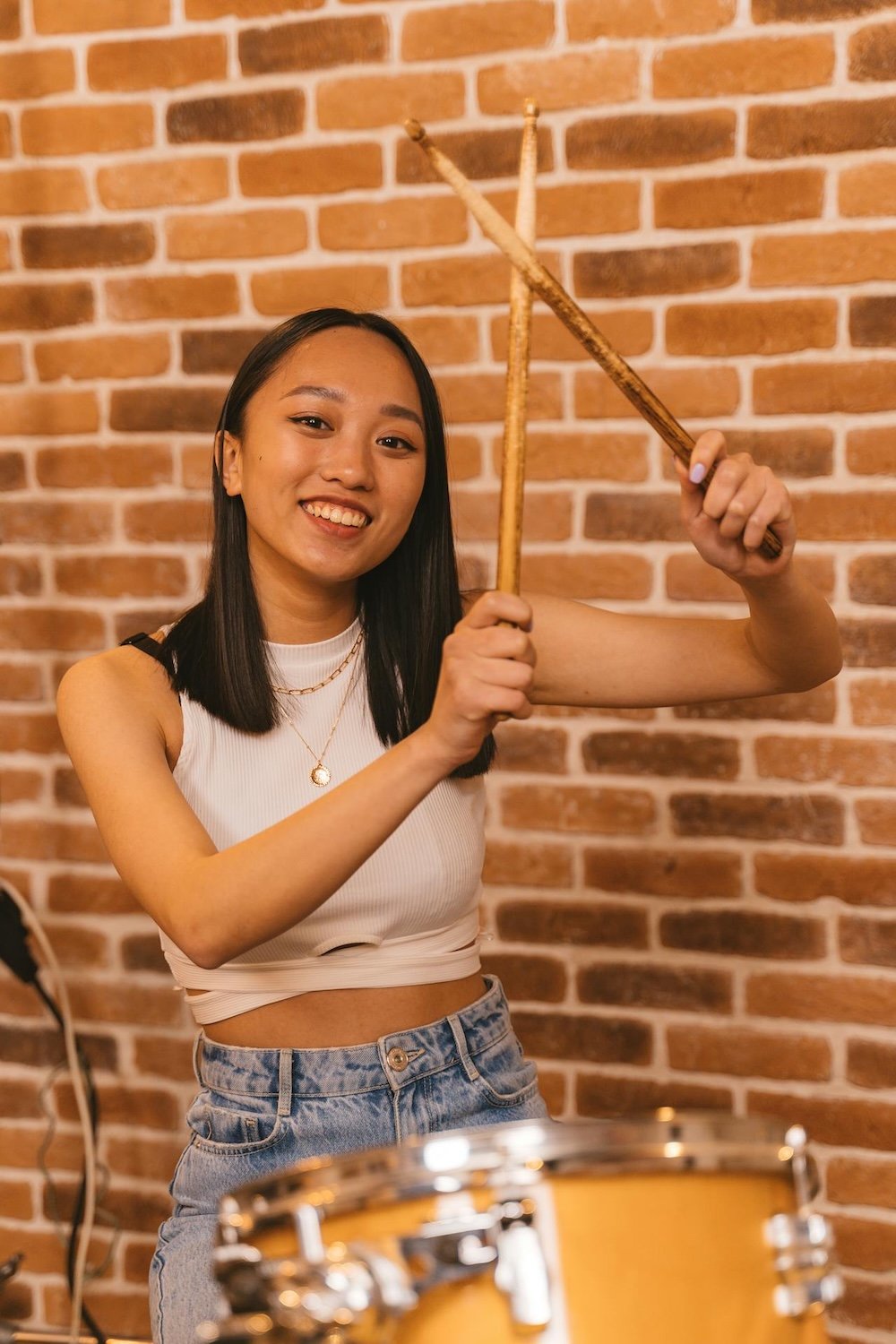
Photo by ANTONI SHKRABA production on Pexels
Drumming Does Something to Your Nervous System That’s Hard to Explain
Most people know that exercise helps with stress. Fewer people think of drumming in the same category, but maybe they should. A study published in PLOS ONE found that rhythmic group drumming reduced symptoms of anxiety and depression while measurably improving participants’ sense of social connection.
There’s something about hitting things in time that short-circuits the mental noise. You can’t spiral about your inbox while you’re concentrating on keeping a beat. It forces you into the present moment in a way that feels less like discipline and more like relief.
You Really Don’t Need a Musical Background
This is the part that stops most people before they even start. The assumption is that drummers are born with some innate sense of rhythm, or that you need years of piano lessons behind you to make sense of it all. Neither is true.
Rhythm is one of the most natural human impulses there is. Babies tap surfaces before they can speak. What you need isn’t talent — it’s a teacher who knows how to build your skills from wherever you’re starting. A good one will move at your pace, not some standardised syllabus timeline.
It’s a Workout, But It Doesn’t Feel Like One
Here’s the thing about drumming that nobody mentions enough: it’s physical. Properly physical. Your arms, legs, and core are all working at once, and thirty minutes behind a kit can burn roughly the same calories as a light jog.
But unlike the treadmill, you’re not watching the clock. You’re too busy listening, adjusting, reacting. The movement stops feeling like effort and starts feeling like play, which is probably why so many women who start drumming actually stick with it.
Something About It Changes How You Carry Yourself
This one is harder to quantify, but it comes up again and again. Women who take up drumming often describe a kind of quiet confidence that creeps in over time. You’re leading the rhythm. You’re deciding the tempo. You’re holding something together that would fall apart without you.
That isn’t a small thing. Practising that kind of presence, week after week, has a habit of following you out of the studio.
Getting Started Is Less of an Ordeal Than You’d Think
You don’t need to buy a drum kit. You don’t need to have any idea what you’re doing. Most good music schools will have everything set up for you from the first lesson, so the barrier really is just deciding to walk in.
If you’re in Singapore and wondering where to start, the drum lessons by Groove Music School are worth looking into. Lessons are kept personal and tailored to each student, whether you’re picking up sticks for the first time or coming back to drumming after a long break.
The Women Doing This Aren’t Who You’d Expect
They’re not all aspiring musicians chasing a record deal. Most of them are busy women who want something that is entirely theirs: a Tuesday evening that belongs to no one else, a skill built for no reason other than they want it.
That’s a good enough reason. Honestly, it might be the best one.