In today’s highly competitive market, manufacturing efficiency is crucial for businesses striving to stay ahead. Efficient production processes not only help reduce costs but also enhance output, improve product quality, and meet customer demands faster.
A key factor in improving manufacturing efficiency is the use of modern industrial machinery. Technological advancements have revolutionized industrial equipment, offering solutions that can streamline operations, minimize downtime, and boost productivity.
In this article, we’ll explore how businesses can improve manufacturing efficiency through the intelligent use of industrial machinery.
Embracing Automation for Streamlined Operations
Automation is a game-changer for improving manufacturing efficiency. By integrating automated machinery into production lines, businesses can significantly reduce the need for manual labor, minimize human error, and ensure consistent product quality. Automated machines are designed to perform repetitive tasks with precision and speed, allowing manufacturers to increase throughput without sacrificing quality.
One of the primary benefits of automation is that it enables machines to work continuously, 24/7, without the need for breaks or rest, unlike human workers. This leads to a higher volume of production in less time.
Predictive Maintenance: Minimizing Downtime
Another way industrial machinery can improve manufacturing efficiency is through predictive maintenance. Unexpected equipment breakdowns can be costly, leading to production delays and increased repair expenses. Predictive maintenance leverages advanced sensors and monitoring systems embedded in machinery to track real-time performance data. These systems analyze the condition of machinery and predict potential failures before they happen.
By detecting early signs of wear and tear, manufacturers can schedule maintenance during planned downtimes, preventing unplanned stoppages. This approach not only minimizes costly interruptions but also extends the lifespan of machines, reducing the need for expensive replacements.
Using High-quality, Durable Parts
Improving the efficiency and performance of industrial machinery often involves upgrading or replacing specific components. Using high-quality, durable parts can significantly extend the lifespan of machines while boosting their overall performance.
For example, upgrading to more efficient motors or ball bearings can reduce friction and wear, leading to smoother operation and less energy consumption. Additionally, using advanced materials such as heat-resistant alloys or corrosion-resistant coatings can enhance the durability of machine components, especially in harsh operating conditions.
Enhancing Efficiency with the Internet of Things (IoT)
The integration of the Internet of Things (IoT) into industrial machinery is revolutionizing how manufacturers operate. IoT refers to the network of connected devices that communicate with each other, sharing data to optimize processes in real-time. In manufacturing, IoT-enabled machinery can track everything from production rates and equipment status to energy consumption and product quality.
This real-time data allows manufacturers to make informed decisions that improve efficiency. For instance, IoT sensors can monitor the performance of machines and automatically adjust settings to optimize production based on current conditions.
Robotics: Precision and Flexibility in Manufacturing
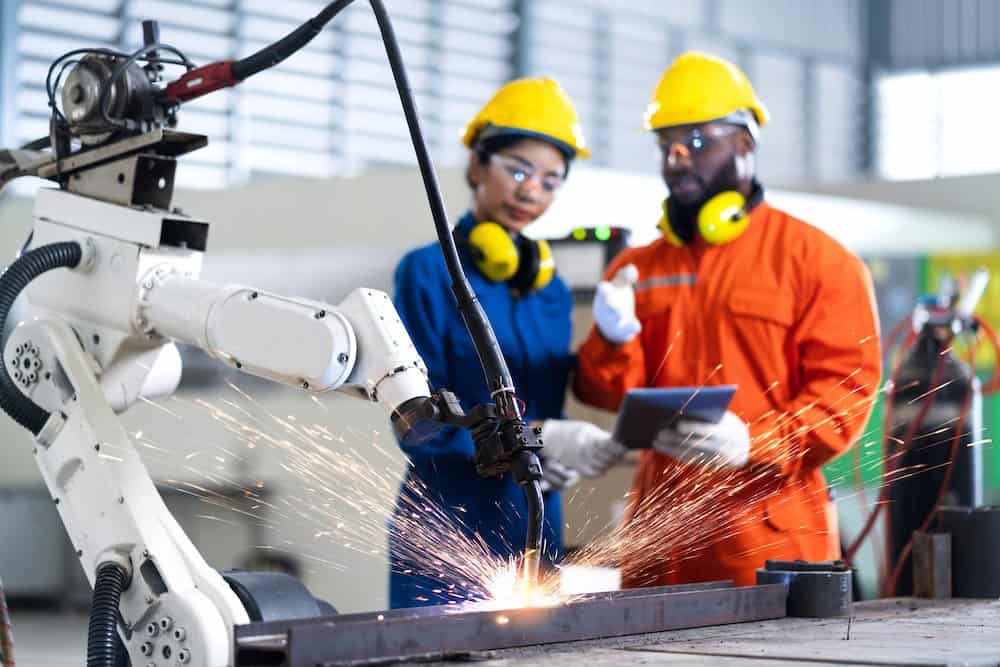
Robotic technology has become a driving force behind increased manufacturing efficiency. Industrial robots are capable of handling complex tasks with a high level of precision, speed, and consistency, making them indispensable in modern manufacturing processes.
One area where robots excel is in tasks that require repetitive movements or a high degree of accuracy. For instance, robots used in the automotive industry can weld or assemble parts with incredible precision, reducing the likelihood of human error. This not only ensures consistent product quality but also speeds up the production process.
Additive Manufacturing: Speeding Up Production and Reducing Waste
Additive manufacturing, commonly known as 3D printing, is transforming the way manufacturers produce components and products. By building items layer by layer, 3D printing allows for greater customization, faster prototyping, and reduced waste.
In traditional manufacturing, complex parts often require multiple steps and significant material waste due to subtractive processes like cutting or milling. Additive manufacturing eliminates much of this waste by only using the necessary material to create a part, making it a more efficient and cost-effective solution.
Energy-Efficient Machinery: Reducing Costs and Environmental Impact
Energy consumption is a major factor in manufacturing costs. As companies strive to improve their bottom line while also reducing their environmental impact, investing in energy-efficient machinery is a smart move.
Modern industrial machinery is designed with energy efficiency in mind, consuming less power while maintaining high levels of productivity. For example, energy-efficient motors and drives used in manufacturing can significantly reduce electricity usage compared to older models. Smart machinery can also automatically power down or enter a low-energy state when not in use, cutting down on unnecessary energy consumption.
The Bottom Line
Improving manufacturing efficiency is essential for businesses to remain competitive in today’s fast-paced global market. By embracing these technological advancements, companies can not only enhance the speed and quality of their production processes but also create a safer, more sustainable working environment.
Investing in modern machinery is an investment in the future of manufacturing, ensuring long-term growth and success for businesses in every sector.
Full disclosure: She Owns It partners with others through contributor posts, affiliate links, and sponsored content. We are compensated for sponsored content. The views and opinions expressed reflect those of our guest contributor or sponsor. We have evaluated the links and content to the best of our ability at this time to make sure they meet our guidelines. As links and information evolve, we ask that readers do their due diligence, research, and consult with professionals as needed. If you have questions or concerns with any content published on our site, please let us know. We strive to only publish ethical content that supports our community. Thank you for supporting the brands that support this blog.