Photo courtesy of Humanculture
As women, we grow things. We grow businesses, ideas, cultures, children, gardens, and visions. We tend to nurture growth that others may overlook. We grow slowly, steadily, in deep ways that last. We are best when we allow expansion instead of forcing it. Give space to life and watch it multiply.
Indigenous women do this with a kind of wisdom I admire. They feed families, protect land, raise children, and survive drought after drought. Their knowledge comes from memory passed down from grandmothers. The land teaches through seasons, soil, and the patient rhythm of life. In a remote village in Tanzania, nothing is wasted, and nothing is rushed. Growth comes through care and patience.
This is why investing in women and Indigenous knowledge is so powerful. We do not need to build something new. We only need to fuel what already works.
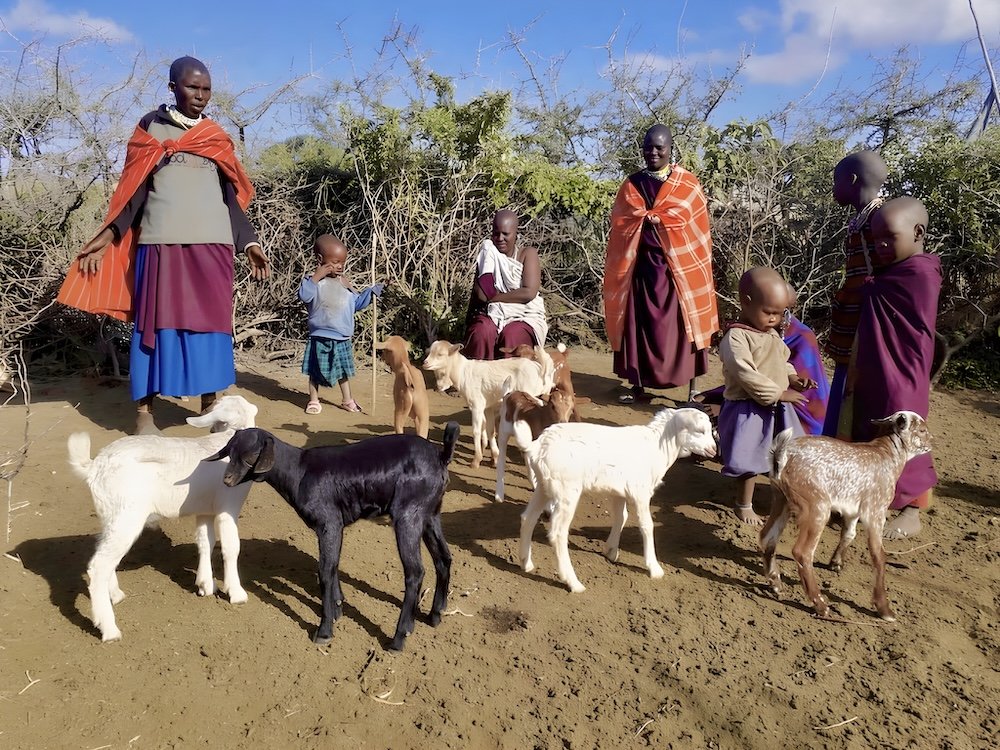
One of my first experiences delivering an initiative in Tanzania for Maasai widowed mothers taught me this clearly. Our program provided five goats to each widowed mother. Thirty-two women in total. We arrived without training manuals or a group of volunteers. We simply placed the goats in their hands, and they took it from there. In this community, Maasai women begin learning to raise goats when they start to walk. This central practice in Maasai life has been perfected over thousands of years. Understanding these realities was the key to unlocking exponential growth from a simple beginning.
With five goats per household, we suddenly had the first women in the village to own their own livestock. Five years later, many of those same women now have herds of around twenty goats. Milk is traded. Kids are born. Income and food security rise season by season. Even through drought and loss, the herds keep regenerating through the skill and nurturing of the women.
That is sustainable growth. It continues without constant intervention because the culture already knows how to carry it.
This experience shaped how I understand humanitarian aid and what some call sustainable scaling. Growth is not always expansion. Growth is renewal and regeneration. It can be the multiplication of what is already strong.
Women know this. Indigenous societies know this. When people who hold this understanding gain greater access, progress moves forward on its own. No instructions needed. A goat becomes a herd. A herd becomes milk, food, and funds for education. Education becomes agency. This compounding has the power to transform future generations.
Growth does not require invention. Sometimes it only needs to be resourced. If you are building something, consider beginning with what already works. Before seeking a new direction, look at what has been sustaining you quietly and consistently. Instead of chasing scale, maybe start to feed the roots that are already thriving.
The widows and their goats showed me something I now carry everywhere. Women create futures through continuity. Through renewal, through regeneration, through what is already alive. Growth thrives inside the systems we nurture. Access is the spark. Knowledge is the engine. Women are the multiplier. Indigenous systems are the horizon.
Give a woman access to what she needs, trust her, and she will grow.
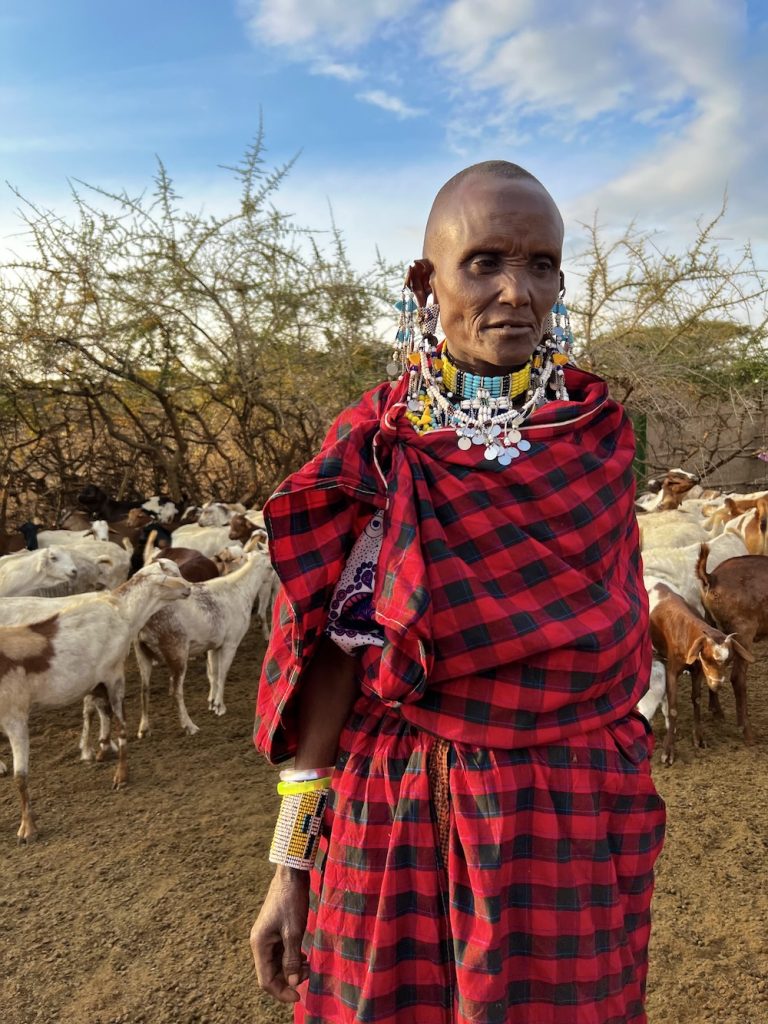
Photo courtesy of Humanculture

Stephanie Zabriskie is a global development executive and founder of Humanculture, an Indigenous-led nonprofit advancing community-driven solutions in water access, food security, education, and women’s economic empowerment. She has led large-scale development initiatives internationally and works at the intersection of sustainability, culture, and economic opportunity.